Last updated November 21, 2026
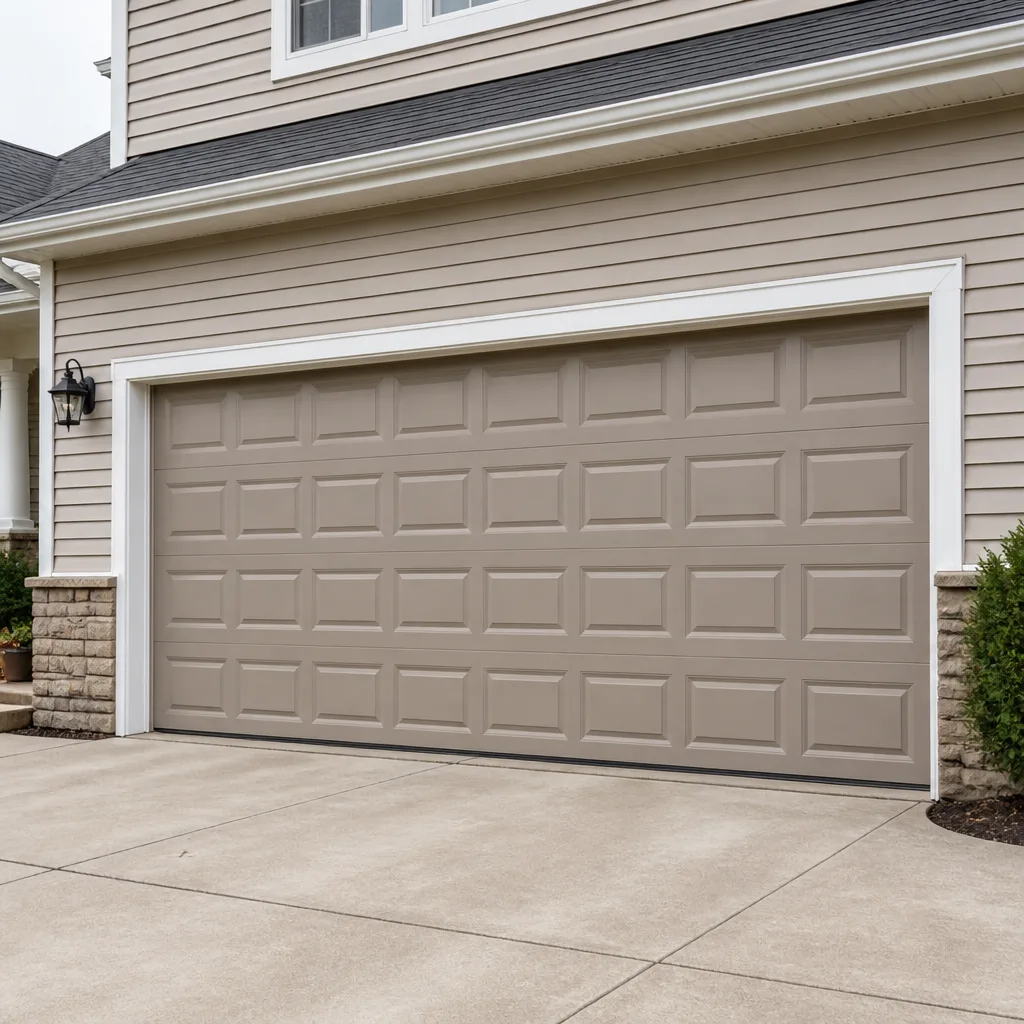 Raised-panel steel
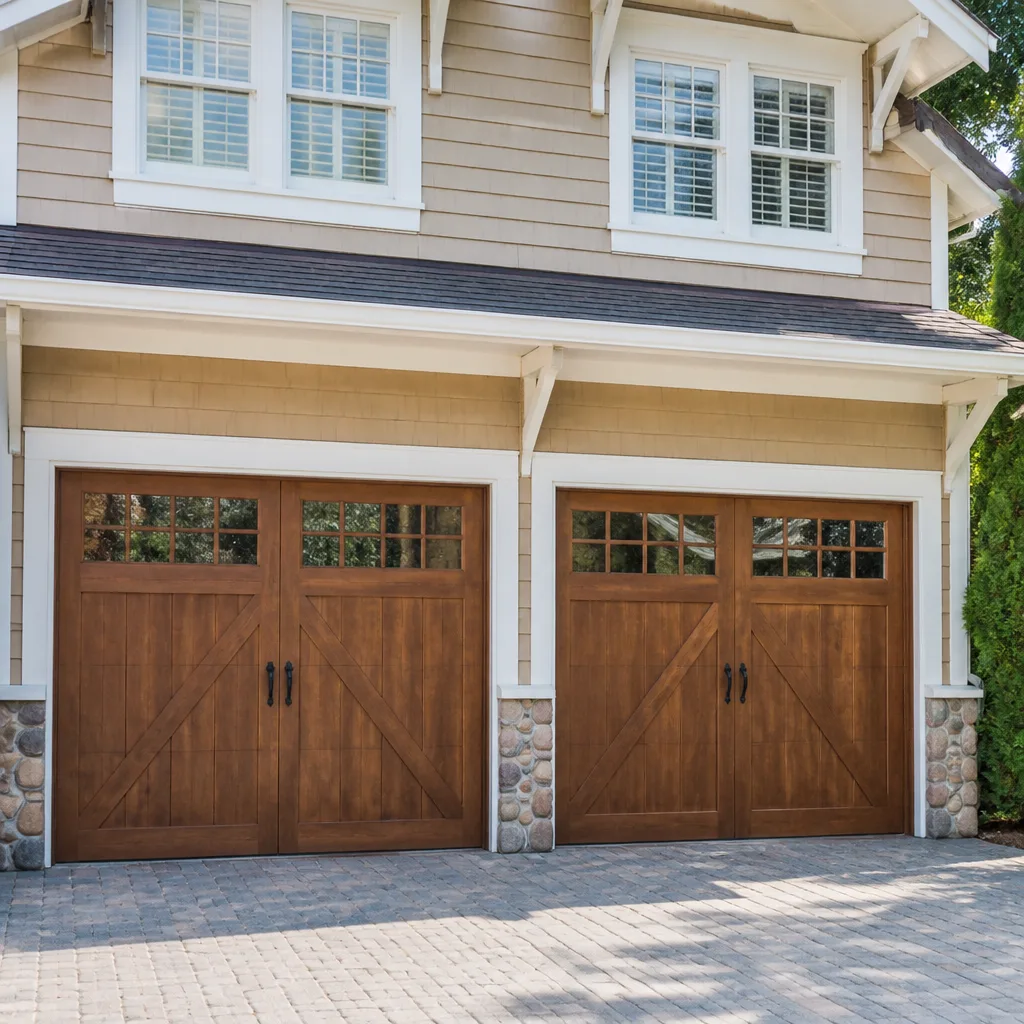 Carriage house
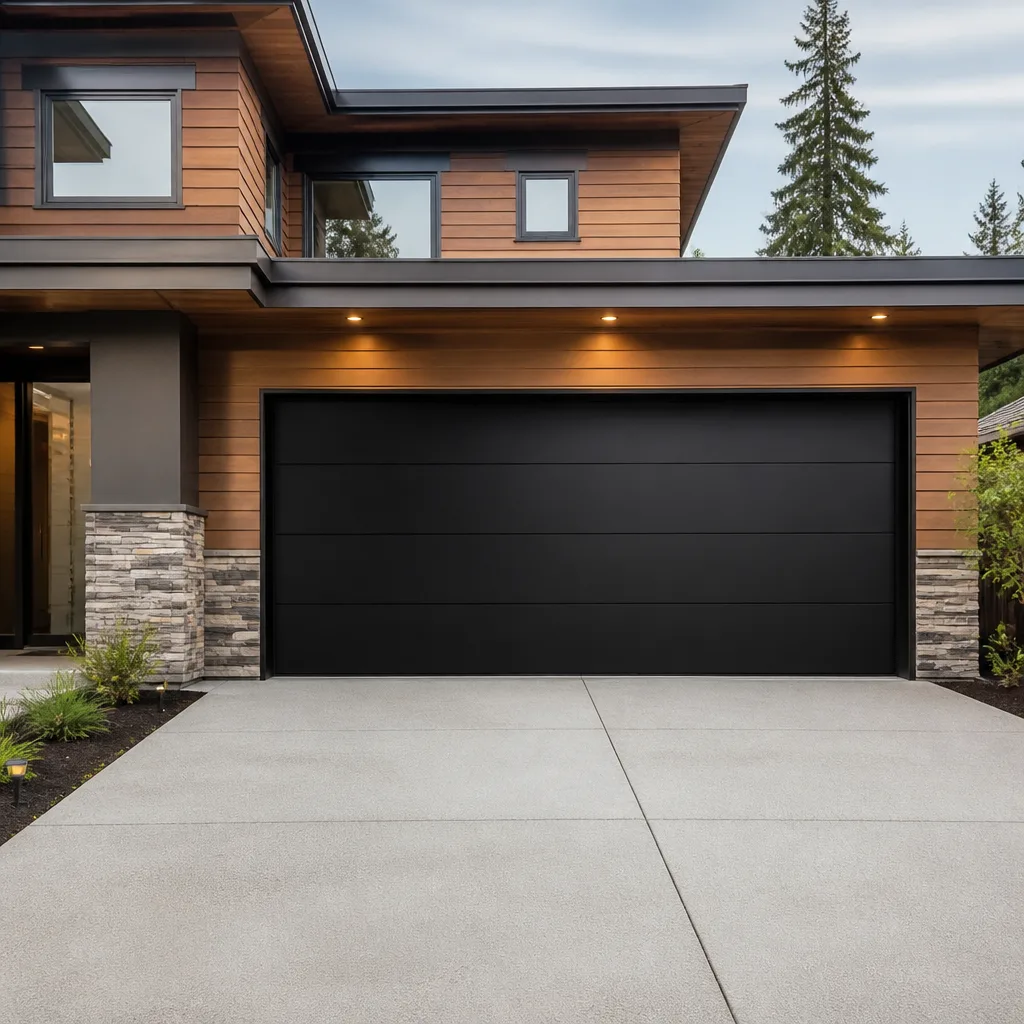 Modern flush
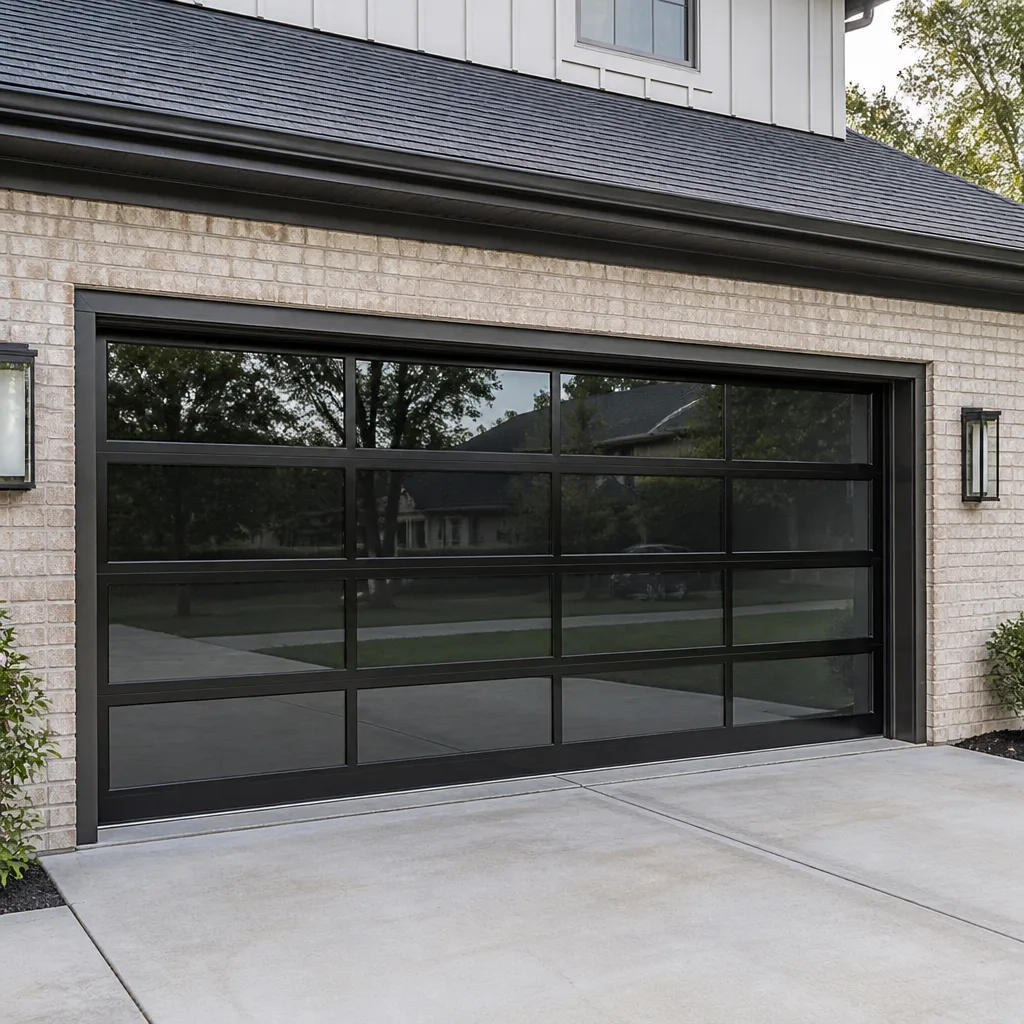 Full-view glass
 LiftMaster openers
 Chamberlain openers
Full 25-point door and opener safety check with every visit - springs, cables, rollers, tracks, and your LiftMaster or Chamberlain opener included
You get a price before we start. It does not change when the pro arrives.
Get your free estimateGarage Door Warning Signs: A Norwalk Homeowner’s Reference Guide
A garage door that slams the last six inches isn’t a minor annoyance. It’s often a spring that has lost its tension or is on the verge of breaking, and the difference between catching that and replacing it in an emergency comes down to knowing what you’re hearing. Most homeowners dismiss the grinding, the hesitation, the little shudder at the top of travel as “just how the door has always been.” That dismissal is exactly what turns a planned repair into a call at 7 AM with a car trapped inside. We work on garage doors across Norwalk every week, and the patterns are remarkably consistent. This guide decodes what each symptom actually means mechanically, so you can triage correctly instead of guessing. You’ll learn the sound-to-cause map, how to tell opener strain from a door problem, the visual signs on cables and springs, and which warnings are “schedule service this week” versus “stop using the door today.”
Quick Answer
The main garage door warning signs are grinding or squealing (worn rollers, dry bearings, or a failing opener gear), a door that slams or drops fast (a weakened or broken spring), hesitation or jerking (binding tracks or a straining motor), and visible cable fraying, spring rust, or coil gaps (imminent failure). If a cable is frayed or a spring is visibly broken, stop using the door and call for repair today. Everything else is usually a “schedule service this week” situation rather than an emergency.
Styles & brands we work with
- Raised-panel steel
- Carriage house
- Modern flush
- Full-view glass
- LiftMaster openers
- Chamberlain openers
Table of Contents
- What Each Sound or Symptom Actually Means
- Opener Strain vs. Mechanical Door Problem
- Visual Warning Signs on Cables and Springs
- Why “It Works Fine Most of the Time” Is the Danger Zone
- The 48-Hour Rule: Wait vs. Act Now
- How Norwalk Seasons Affect Your Door
- What Warning-Sign Repairs Typically Cost
- Common Mistakes to Avoid
What Each Sound or Symptom Actually Means
Garage doors don’t fail silently. Every noise maps to a specific component, and once you know the map, you can describe the problem accurately to a technician, which saves time and narrows the diagnosis. Here’s how the sounds break down in mechanical terms.
| Symptom | Likely Mechanical Cause | Typical Urgency |
|---|---|---|
| Grinding | Worn steel rollers, dry hinge bearings, or debris in the track | Schedule service this week |
| Squealing | Metal-on-metal friction at hinges, rollers, or the torsion shaft | Schedule service this week |
| Banging on open or close | Loose mounting bolts, a failing spring, or a door that has lost cable tension | Inspect before next use |
| Rapid slam in the last few inches | Weakened, stretched, or partially broken spring | Stop using the door |
| Hesitation or jerking | Binding track, damaged roller, or an opener pulling too hard | Schedule service this week |
| Door reverses without contact | Safety sensor misalignment or obstructed lens | Fix before next use |
| Opener hums but door doesn’t move | Stripped opener gear, broken spring, or operator arm disconnected | Call for diagnosis |
Grinding is the most often ignored because it appears gradually. Steel rollers wear flat spots over time, and once they’re out of round, they grind along the track on every cycle. That vibration transfers into the door panels and into the opener, which accelerates wear elsewhere. Squealing is friction, plain and simple, and it rarely fixes itself with lubricant once a bearing has worn through the plating. If you’ve lubricated a hinge twice and it still squeals, the metal inside has failed.
The slam is different. A garage door that drops the last six inches fast no longer has proper spring counterbalance. That stored tension is what keeps the door light and controlled. When a torsion spring weakens or a coil breaks, the door’s weight takes over and gravity does the work. In Norwalk’s older homes with heavier solid-wood doors, that slam puts real stress on the opener rail and the door frame. We’ve seen this pattern in neighborhoods across Norwalk, and it almost always points to the spring rather than the opener. If you recognize your door in this table, our garage door repair team can confirm the diagnosis on-site.
Opener Strain vs. Mechanical Door Problem
The single most useful distinction in garage door troubleshooting is whether the problem lives in the opener motor or in the door itself. It determines who you call and what the repair costs, and homeowners get it wrong constantly by assuming every problem is the opener.
Here’s the practical test. Disconnect the opener by pulling the emergency release cord (the red handle). With the door disengaged, lift it by hand to about waist height and let go. A properly balanced door should stay put or drift very slightly. If it slams down, the spring system or door balance is the problem, not the opener. If it moves freely and stays put, the door itself is healthy, and what you heard was the motor.
Opener strain looks and sounds different from door strain:
- Opener symptoms: Motor hums but the door doesn’t move, the opener jerks or stops partway, the light flashes a trouble code, or the unit runs longer than it used to for the same door.
- Door symptoms: The door binds at one specific point in travel, tilts visibly to one side, rubs against the track, or needs a hand-push to start moving.
- Both-at-once symptoms: The door drags and the opener strains to compensate. This usually means a door problem is causing opener wear, and fixing only the opener will fail again.
If the door fails the hand-lift test, don’t let a technician simply replace the opener. That masks the real problem and burns through a new motor. On modern openers from Chamberlain or Genie, the control board will often log an overload fault when the door is binding, which is a signal to check the door first. Our garage door opener repair work starts with that balance test before anything else, because it’s the fastest way to answer whether the door or the motor is at fault.
Visual Warning Signs on Cables and Springs
Some warnings are silent. You won’t hear a cable fraying or a spring rusting from the inside. A visual inspection of the torsion hardware every few months is worth more than any sound-based diagnosis, because these components fail suddenly and dangerously.
Cables. The lifting cables are braided steel and live under tension. Look along the length of each cable on both sides of the door. A healthy cable is uniformly bright and smooth. Warning signs include:
- Fraying or “bird-caging” where individual wire strands separate and fan out
- Kinks, flat spots, or a section that has lost its twist
- Rust concentrated in patches rather than even across the cable
- Cable slack on one side while the other side is taut
Any of those means the cable is close to snapping, and a snapping cable is genuinely dangerous. It can whip with force, and a door held only by one cable can drop. Stop using the door and call for service.
Springs. Torsion springs sit on the shaft above the door; extension springs sit along the tracks on either side. On torsion springs, look for:
- Rust distribution that’s heavy at one point, often where a coil has started to crack
- Visible gaps between coils where the spring should be tight
- A spring that looks stretched longer than its neighbor on a two-spring setup
- Any obvious break, which usually looks like a clean slice across the coil
On a matched pair, both springs usually get replaced together because they’ve worn at the same rate. A single spring replacement on a pair that aged together tends to fail again soon. That’s mechanical reality, not an upsell. Our garage door spring repair team checks both springs on every call.
Do not attempt spring or cable work yourself. Torsion springs store an enormous amount of energy, and a spring that releases unexpectedly can cause serious injury even to an experienced technician. Visual inspection from a safe distance is the extent of what a homeowner should do. Leave the wrenches to someone trained for it.
Why “It Works Fine Most of the Time” Is the Danger Zone
The most dangerous warning sign category isn’t the loud grinding or the obvious slam. It’s the door that works fine most of the time. That intermittent behavior is more hazardous than a total failure because it lets a homeowner convince themselves nothing is wrong, until it fails at the worst moment with a car half inside or a child underneath.
Intermittent garage door failures have a short list of common causes:
- A partially broken spring. On a two-spring setup, one can break while the other keeps the door moving. The door “works,” but it’s being held by half the counterbalance it was designed for. Spring pressure on the opener and cables doubles, and something else fails soon.
- A failing opener logic board or capacitor. The motor runs intermittently, works on some cycles and not others, and often the light flickers. This is common on older openers from Craftsman or Chamberlain that are past their typical service life.
- A loose or worn safety sensor. The door reverses when it shouldn’t, or refuses to close, then works again after the sun shifts. Sunlight hitting the sensor lens is a frequent trigger.
- A cable on one side that has started to slip. The door tilts slightly on some cycles, then levels out. The cable may still be attached but has partially jumped its drum.
- Loose hinge and roller hardware. One roller binds, the door hesitates, then the operator overrides it. The next cycle is fine.
Intermittent symptoms are the toughest to diagnose remotely. The best thing a homeowner can do is to keep a simple log – when the door fails, what the temperature is, whether it’s opening or closing, and whether the door tilts. Bring that log to the service call. Technicians can find intermittent failures much faster with a pattern to work from. A garage door in Norwalk that fails only on cold mornings points to spring tension; one that fails only on hot afternoons points to track expansion or sensor sunlight.
The 48-Hour Rule: Wait vs. Act Now
Not every warning sign is an emergency, and overreacting to a squeaky roller costs time and money. But putting off the wrong sign risks damage and injury. We use a simple two-tier rule with our own customers: signs to schedule service this week, and signs to stop using the door and call today.
Signs to schedule service this week:
- Grinding, squealing, or metal-on-metal noise on every cycle
- The door hesitates or jerks but still moves
- Visible rust or a loose hinge that isn’t affecting travel
- One roller that looks flat or wobbles
- The door “settles” a bit unevenly when fully closed
These items get worse with use but aren’t on the verge of releasing energy. A planned repair this week catches them before the damage widens into cables or springs.
Signs to stop using the door and call today:
- Any visible break in a torsion or extension spring
- Any frayed cable or cable that has popped off the drum
- The door slams on close, drops fast, or falls after the release cord is pulled
- Visible tilt on every cycle, especially if the tilt is new
- The door comes off its track at any point
- You hear a loud bang from the garage and the door no longer opens normally
The big one is that “loud bang.” When a torsion spring breaks, it releases its stored energy in a split second and makes a noise that homeowners describe as a gunshot from inside the garage. If you hear that, the door is now being held by cables and gravity alone. Don’t cycle it and don’t try to open it. Call for emergency service. Norwalk Garage Door Repair Pros offers emergency response for exactly these cases, and we’d much rather take the call from a door that’s still on its tracks than from one that has come down on a car.
How Norwalk Seasons Affect Your Door
Norwalk’s climate gives garage doors a pretty real annual workout. Cold winters, humid summers, and a real swing between the two accelerates wear on every moving part, and it changes which warnings you should be watching in each season.
Winter puts load on the spring and the opener. Cold metal contracts, grease thickens, and rollers that spun freely in the fall now drag. The first cold snap of the year is a common time for a marginal spring to finally break, because the metal becomes more brittle. Openers pull harder in the cold and older units will sometimes refuse to lift the door on the coldest mornings. If your door struggles on cold mornings and works fine by the afternoon, an aging spring or a tired opener is likely at the root.
Summer is the sensor and track season. Heat expands the door and track slightly, and a door that was perfectly adjusted in April can start to bind in July. The safety photo-eye sensors are also more likely to trigger false reversals during the long days when direct sun hits the lens. If the door unexpectedly reverses on bright afternoons, aim the sensor or check for a mislabeled obstruction before assuming the motor is going bad.
The wet stretches bother the metal hardware. Hinges, rollers, and spring coils collect moisture and rust, and rust is one of the clearest early warnings a homeowner can see on a spring. A light application of proper garage door lubricant on hinges and rollers every few months slows that down. Don’t spray lubricant on the springs themselves, and don’t use WD-40 as a long-term solution – it’s a cleaner, not a lubricant. A little attention at each season change in Norwalk will keep the door smoother and catch the signs before they get expensive.
What Warning-Sign Repairs Typically Cost
Homeowners often put off garage door service because they don’t know what the repair will cost, and worry it will spiral. Here are typical ranges for warning-sign repairs, though the written estimate is always the final price. Every job is quoted and agreed before any work starts.
| Repair | Typical Estimated Cost |
|---|---|
| Roller replacement (per door, full set) | $120 – $220 |
| Hinge replacement | $100 – $200 |
| Single torsion spring replacement | $180 – $340 |
| Matched pair of torsion springs | About twice the single-spring price |
| Cable replacement (per side) | $180 – $300 |
| Opener logic board replacement | $180 – $350 |
| New opener installation (standard unit) | $380 – $700 |
| Safety sensor realignment or replacement | $80 – $180 |
A few things to understand about that table. A spring price covers one spring; if the door has a matched pair, both commonly get replaced together, and the pair price is about double. That’s not markup, it’s the reality of how paired springs wear. A single spring on a pair-system that ages together tends to fail again within a short window, and a second service call usually costs more than replacing both the first time.
Spring and cable replacement is the technical heart of what we do. Because our technicians have up to 13 years of experience, they’ve seen the same hardware come through in every possible condition, from early binding to full failure. That experience matters most in the repair types that carry the highest risk. The written estimate sets the price, and it doesn’t change once the job is under way unless you approve additional work. Call (855) 337-1321 to schedule a free estimate in Norwalk.
Common Mistakes to Avoid
- Ignoring the slam. A door dropping the last few inches is a spring problem showing its cards early. Wait, and it usually goes from repair-priced to emergency-priced. Get it checked while it’s still an annoyance.
- Replacing the opener when the door is the problem. If you haven’t pulled the release cord and hand-lifted the door, you don’t know which component is failing. Replacing the motor when the door is binding just burns through a new motor.
- Lubricating the springs. Grease traps grit on the coils and makes corrosion worse. Lubricate hinges and rollers only, and skip springs entirely.
- Trying to adjust a torsion spring yourself. Springs are stored energy, and a slipped winding bar can cause serious injury even to someone who’s watched every tutorial. This is the one component that should always be left to a technician.
- Disconnecting the safety sensors. A door that “works fine” with the photo-eye bypassed is a door that can close on a child or a pet. Sensor false alarms are cheap to fix; the consequences of a bypass aren’t.
- Waiting for the whole spring to break. A spring with visible rust at one point or a slight gap between coils is showing you where it will fail. Replacing it on the visible warning is far safer than waiting for the bang.
- Choosing a general handyman for a door problem. Garage doors and openers are a specialty. Brand knowledge, balance testing, and spring safety aren’t DIY or generalist territory. A garage door specialist will diagnose and repair correctly the first time instead of guessing across unfamiliar hardware.
See the difference
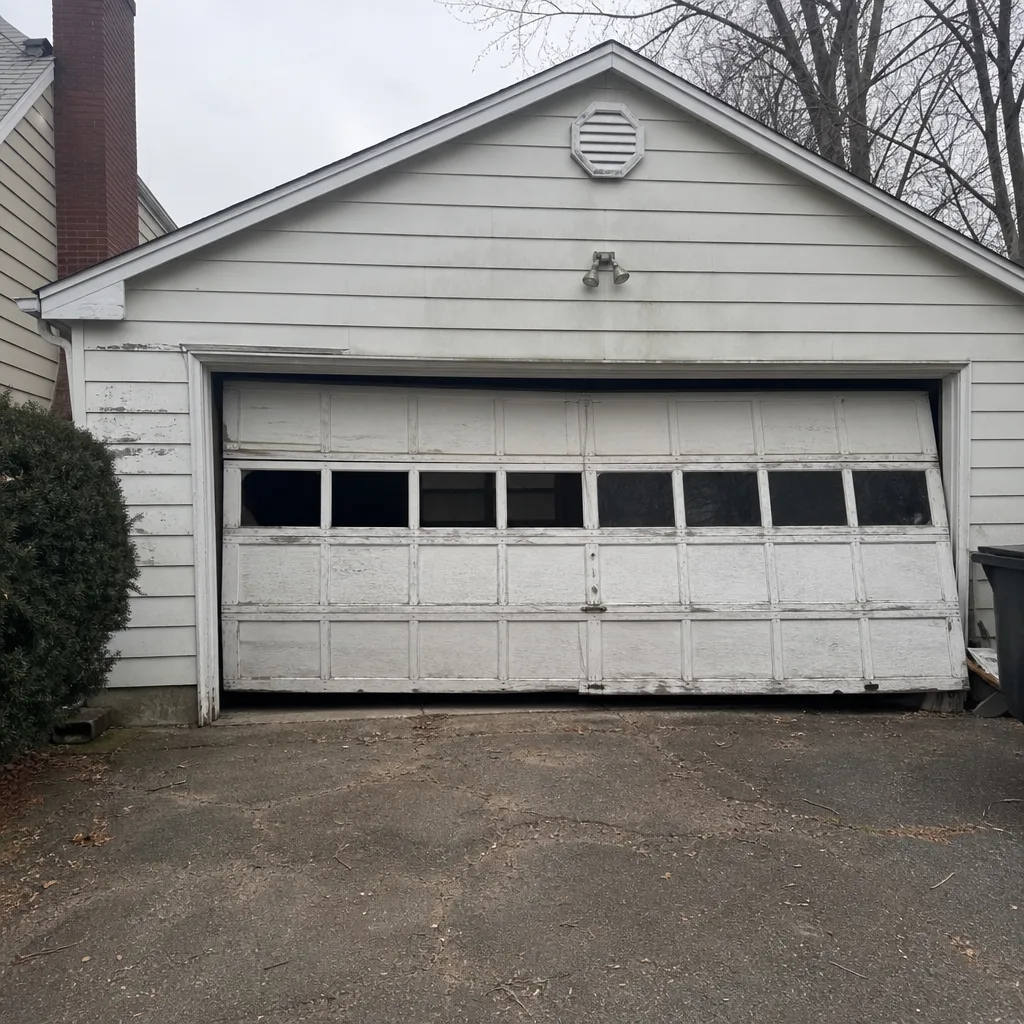 Before
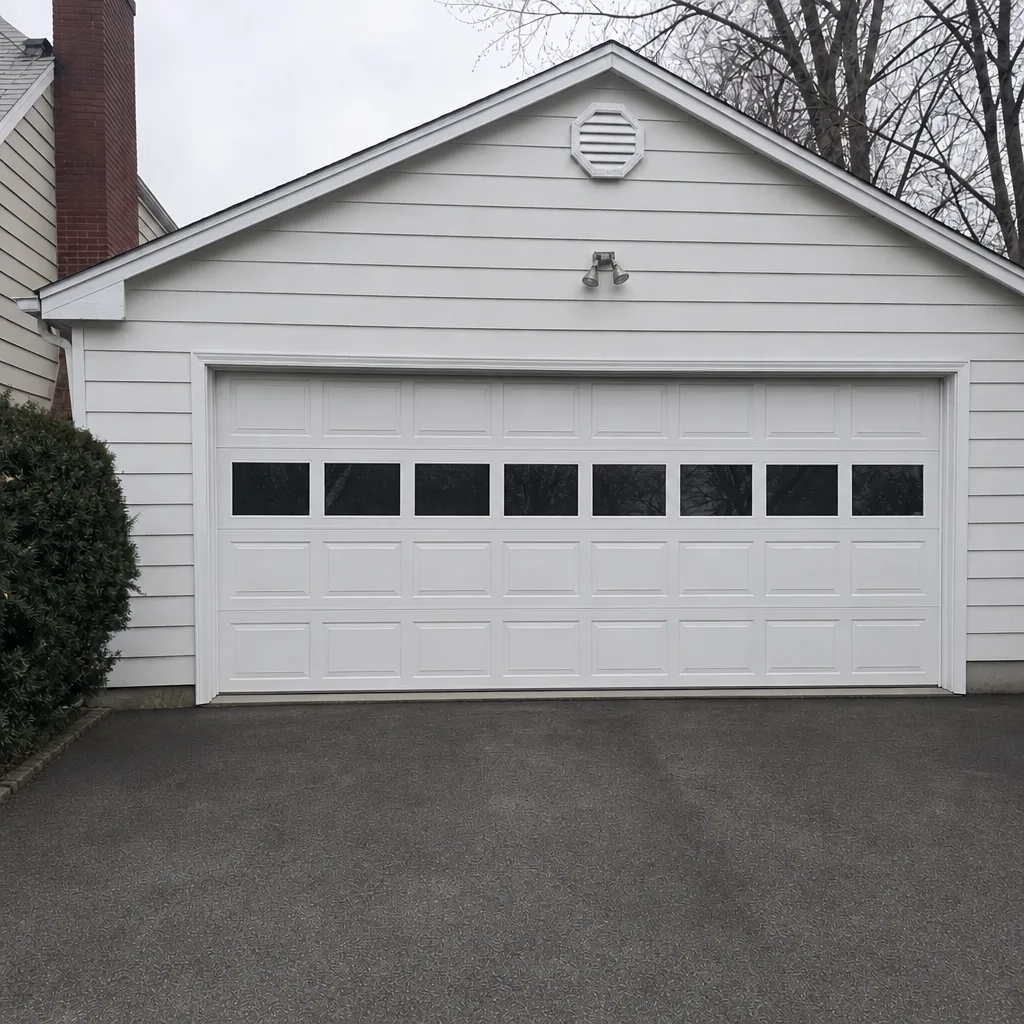 After
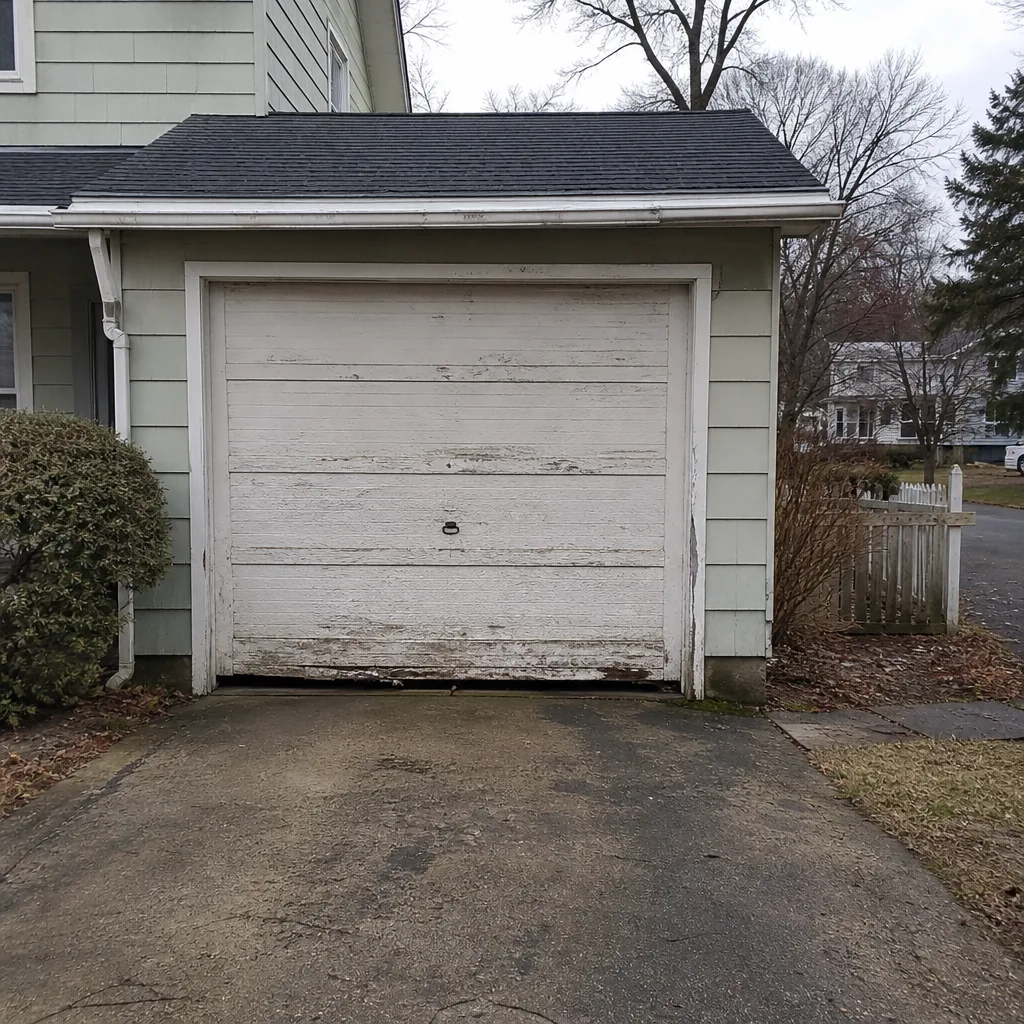 Before
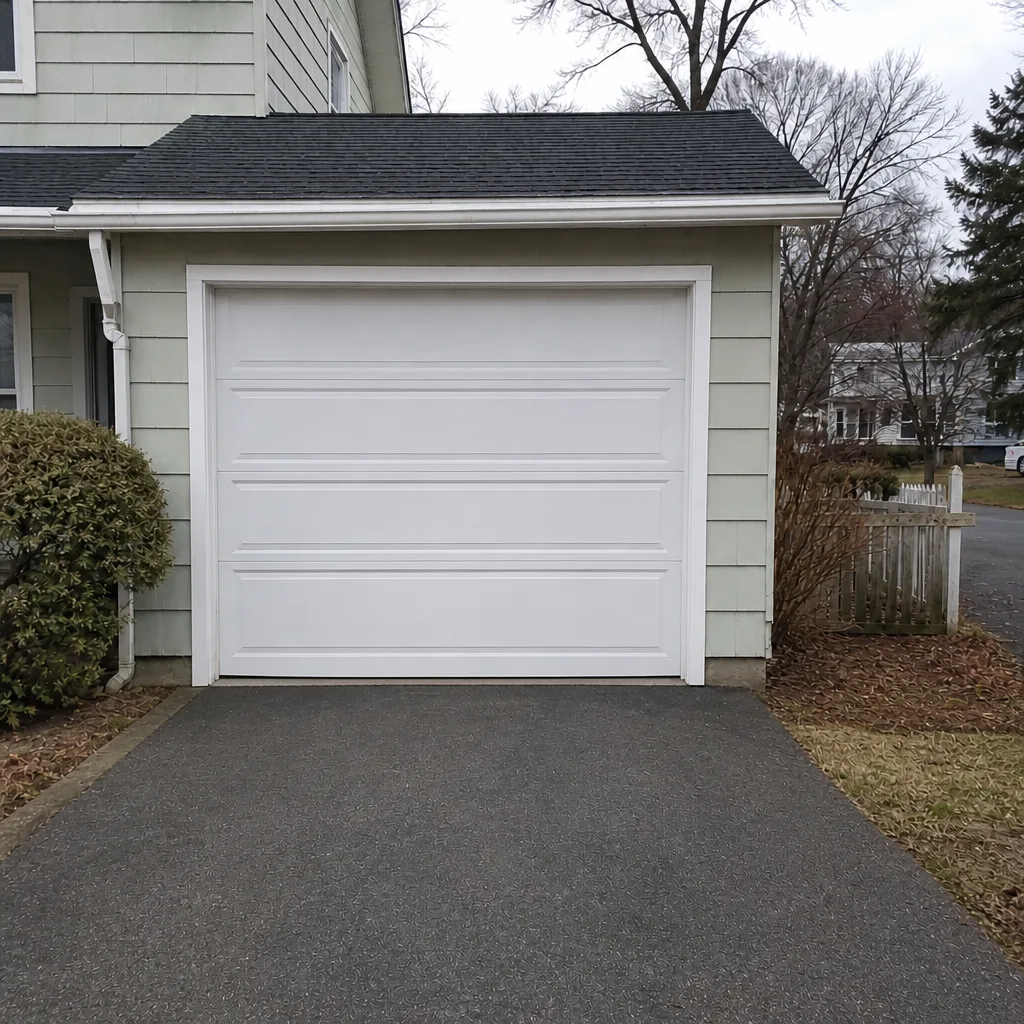 After
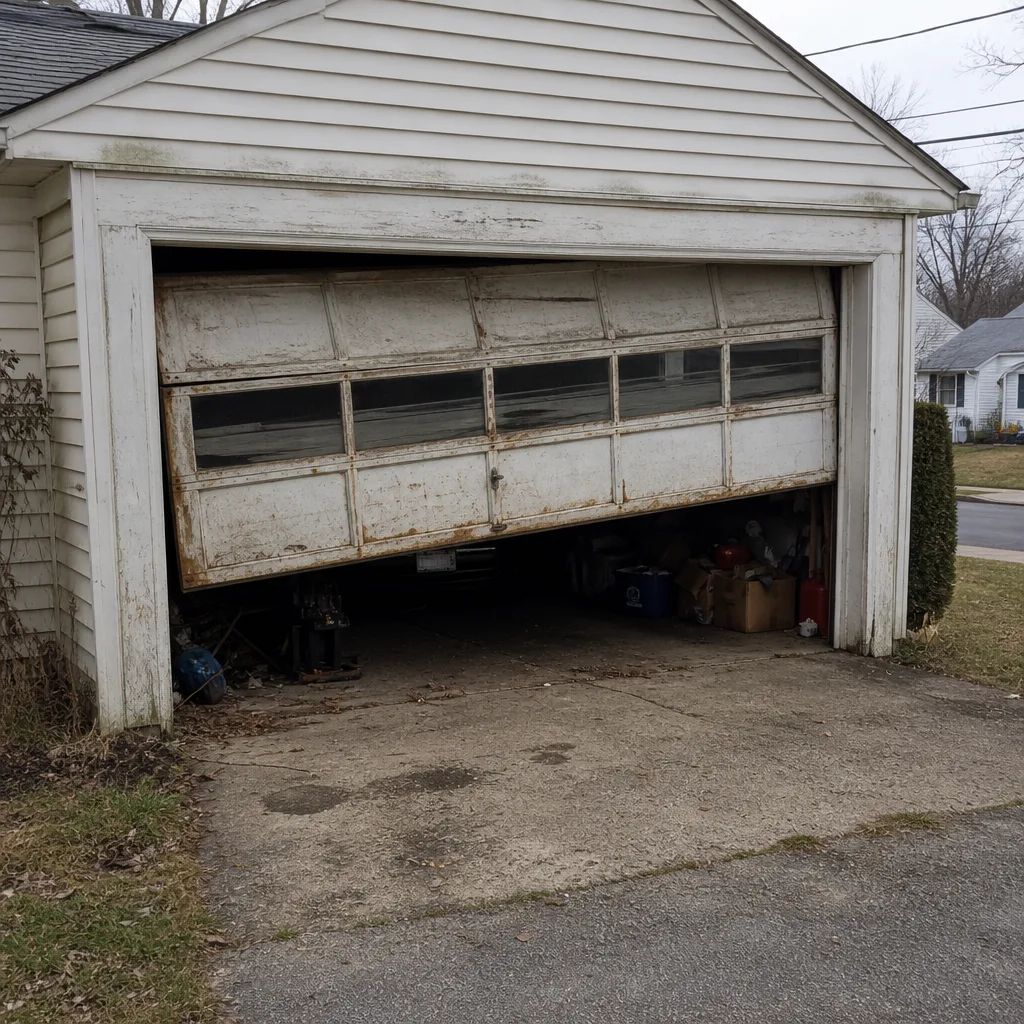 Before
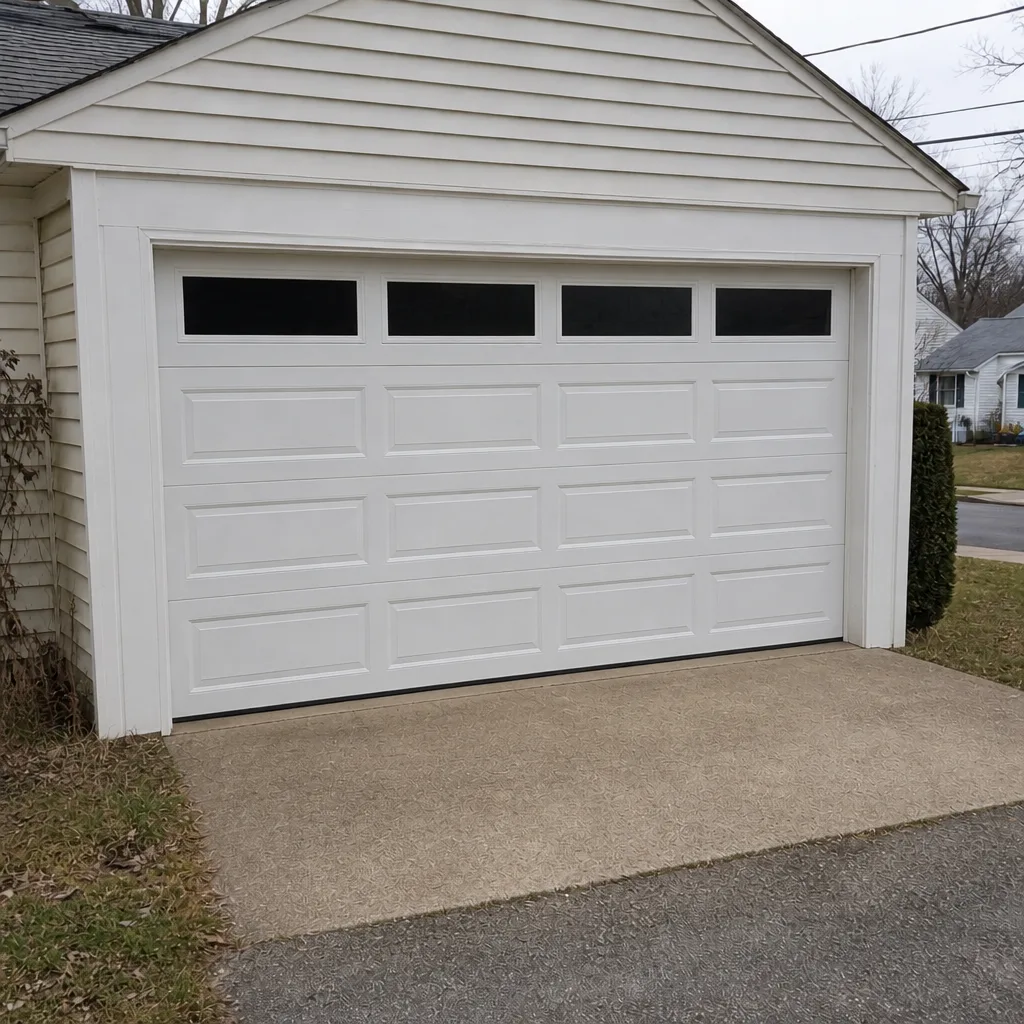 After
When to Call a Professional
Call a professional the moment any of the stop-using-it signs show up: a broken spring, a frayed or detached cable, a door that slams on close, visible tilt, or a door that comes off its track. Those are genuine safety problems, and they can escalate into injury or vehicle damage if you keep cycling the door. For the schedule-this-week signs – grinding, squealing, hesitation, a roller that’s gone flat – calling now saves you from later repairs and lets you plan around a routine appointment instead of an emergency. If your door uses modern hardware from suppliers like Clopay or Amarr, brand-specific knowledge helps the technician skip the guesswork and go straight to the right parts. Norwalk Garage Door Repair Pros offers free estimates in Norwalk and can be reached at (855) 337-1321.
Frequently Asked Questions
A broken torsion spring is the most serious common warning sign because it releases stored energy suddenly and leaves the door held only by cables, and if you hear a loud bang from the garage followed by the door refusing to lift normally, stop using the door and call for emergency service. A snapped spring can also whip a cable, so keep clear of the door until a technician arrives. Call (855) 337-1321 and we’ll talk through what you’re seeing.
Pull the red emergency release cord to disconnect the opener, then lift the door halfway by hand and let go. If it stays in place, the door is balanced and the problem is the opener; if it slams down or drifts, the door’s spring system or balance is at fault. That test takes about 30 seconds and saves a lot of diagnostic time. If you’re not comfortable doing it, call (855) 337-1321 and we’ll do it on-site.
We recommend a visual check every few months plus a quick look at each season change, since Norwalk’s winters and summers put real wear on the door’s moving parts. Look at cable condition, spring rust, roller wear, and how the door behaves in its first couple of inches of travel. A minute of watching catches most of the early warning signs. If anything looks off, call (855) 337-1321 for a free estimate.
Intermittent behavior is often a sign of a partially failed component, especially on a two-spring setup where one spring may be broken while the other keeps the door moving. The door “works,” but the spring system is under twice its designed load and something else will fail soon. Keep a small log of when it fails and what the weather was doing, then have a technician review it. Call (855) 337-1321 to book an inspection.
Warning-sign repairs in Norwalk typically run from $80-$180 for a safety sensor fix up to $380-$700 for a new standard opener installation, with most spring, cable, and roller repairs landing between $120 and $340. A single torsion spring is $180-$340, and a matched pair is about twice that. The written estimate sets the final price and is agreed before any work starts. Call (855) 337-1321 for an exact quote – estimates are free.
Yes, you can safely lubricate the hinges and rollers with proper garage door lubricant every few months, which slows wear and quiets noise. Do not lubricate the torsion springs, and avoid using light oils like WD-40 as a long-term solution since they don’t stay in place. Anything involving the spring, cable, or opener mechanism should go to a technician. Call (855) 337-1321 if you’d like us to take a look and quote a repair.
The Bottom Line
Garage doors telegraph their failures through specific mechanical warnings, and the homeowners who catch them early spend less and stay safer. A grindy roller is a scheduled repair; a frayed cable or a slammed close is an emergency. The hand-lift test tells you whether the opener or the door is at fault. Visual checks of cables and springs every few months catch the silent failures that have no sound. And intermittent failures – the door that works fine most of the time – deserve the most attention because they hide the biggest danger. If anything on this list is happening in your Norwalk garage, get it looked at while it’s still cheap to fix.
Every garage door gives warning. The difference is whether you decode it in time. If something on this guide rings a bell, don’t wait for it to become a slam or a bang – call Norwalk Garage Door Repair Pros at (855) 337-1321 for a free estimate. We work on the brands in your garage – LiftMaster, Chamberlain, Genie, Clopay, Amarr, Wayne Dalton, Craftsman, and Raynor – and we can help you sort the schedule-this-week signs from the stop-using-it signs today. Getting back to normal, without the guesswork, is what our Norwalk Garage Door Repair Pros team does best.
Written by the team at Norwalk Garage Door Repair Pros.