Last updated November 21, 2026
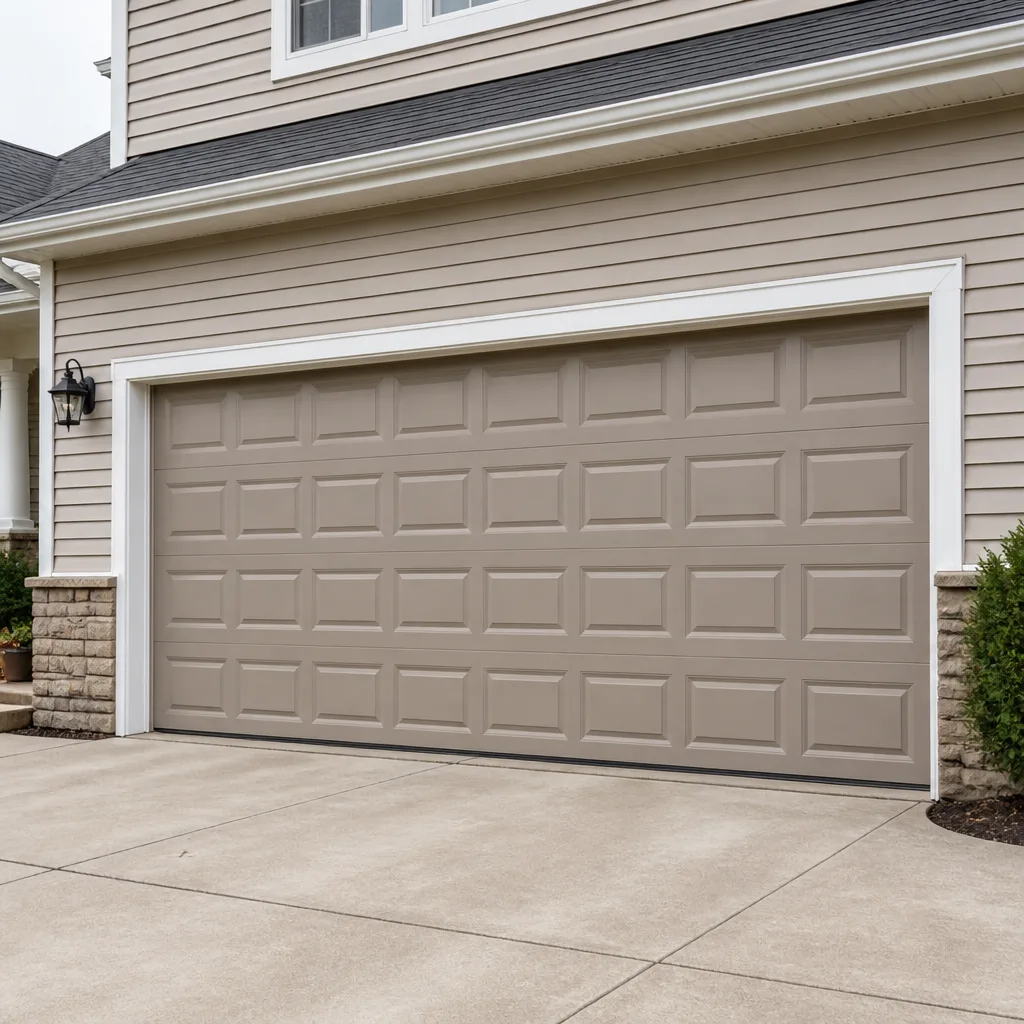 Raised-panel steel
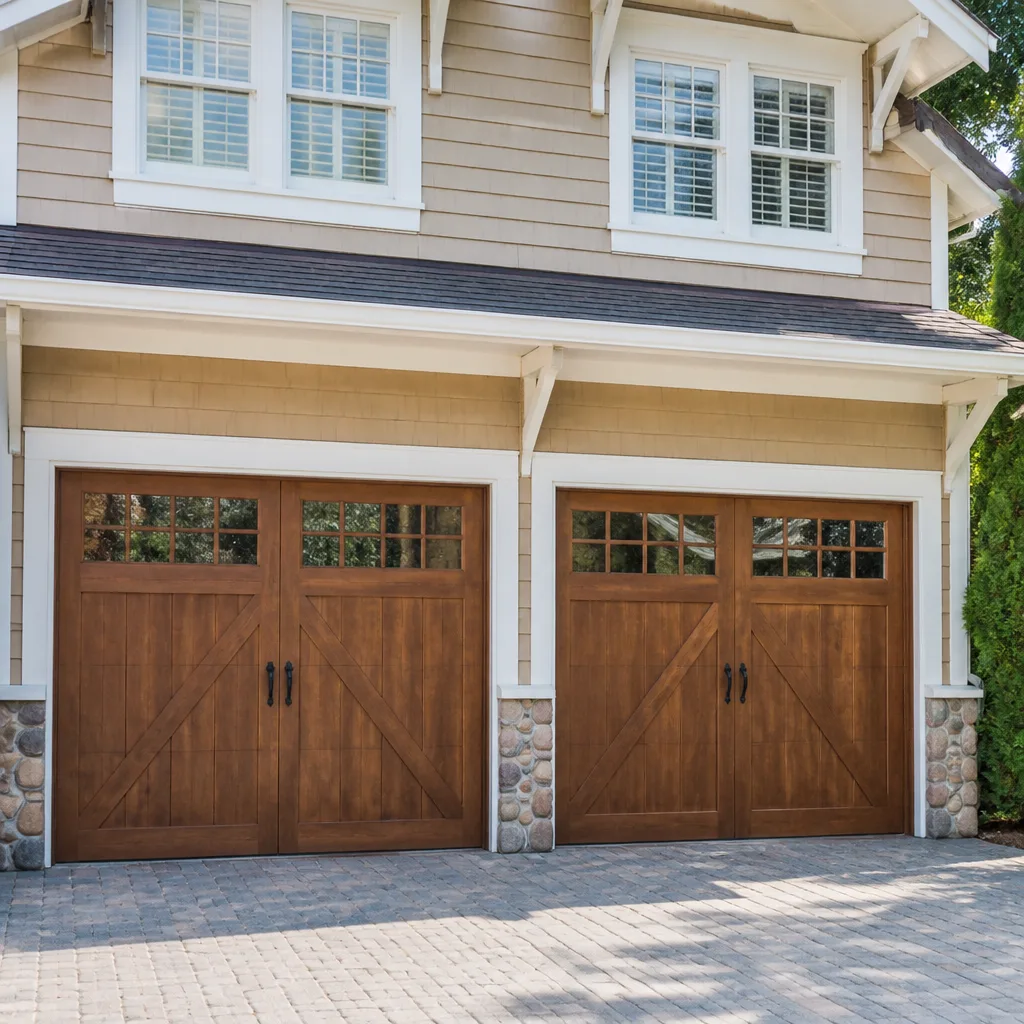 Carriage house
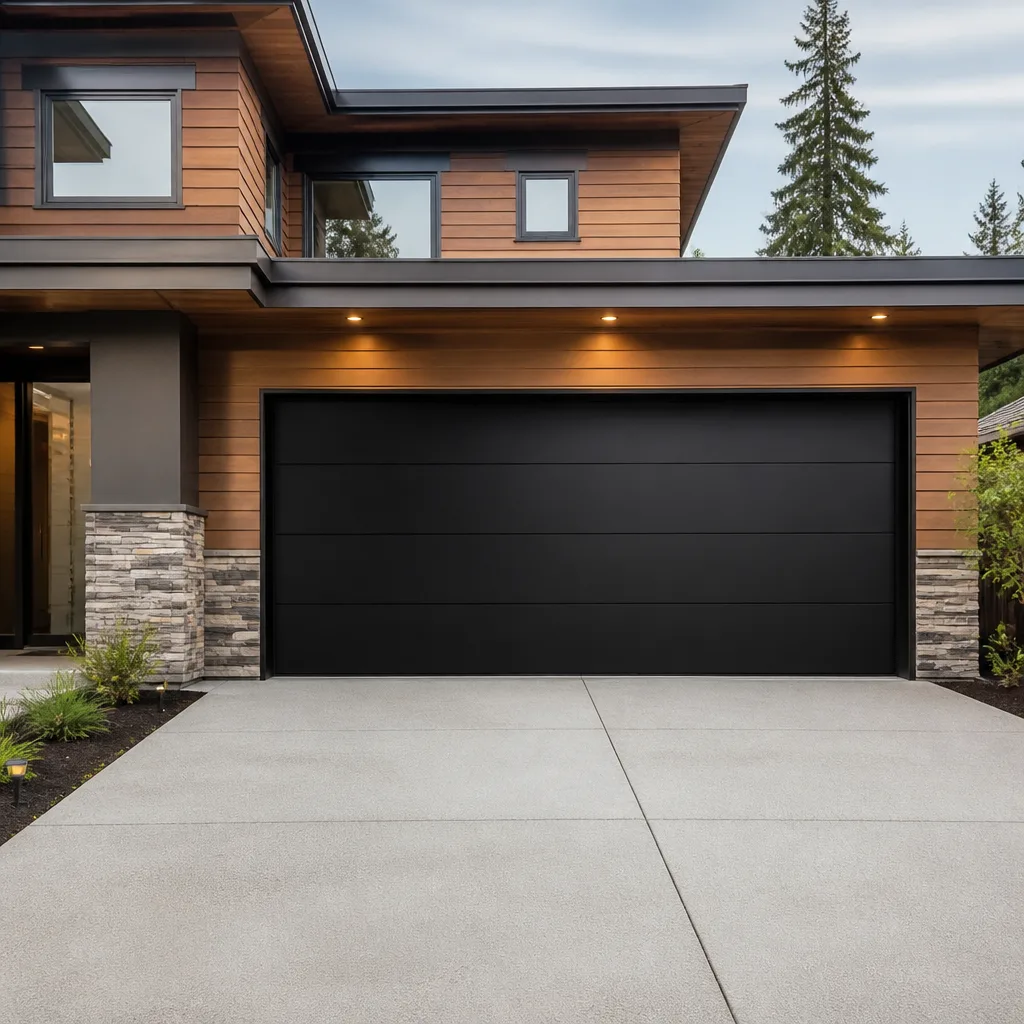 Modern flush
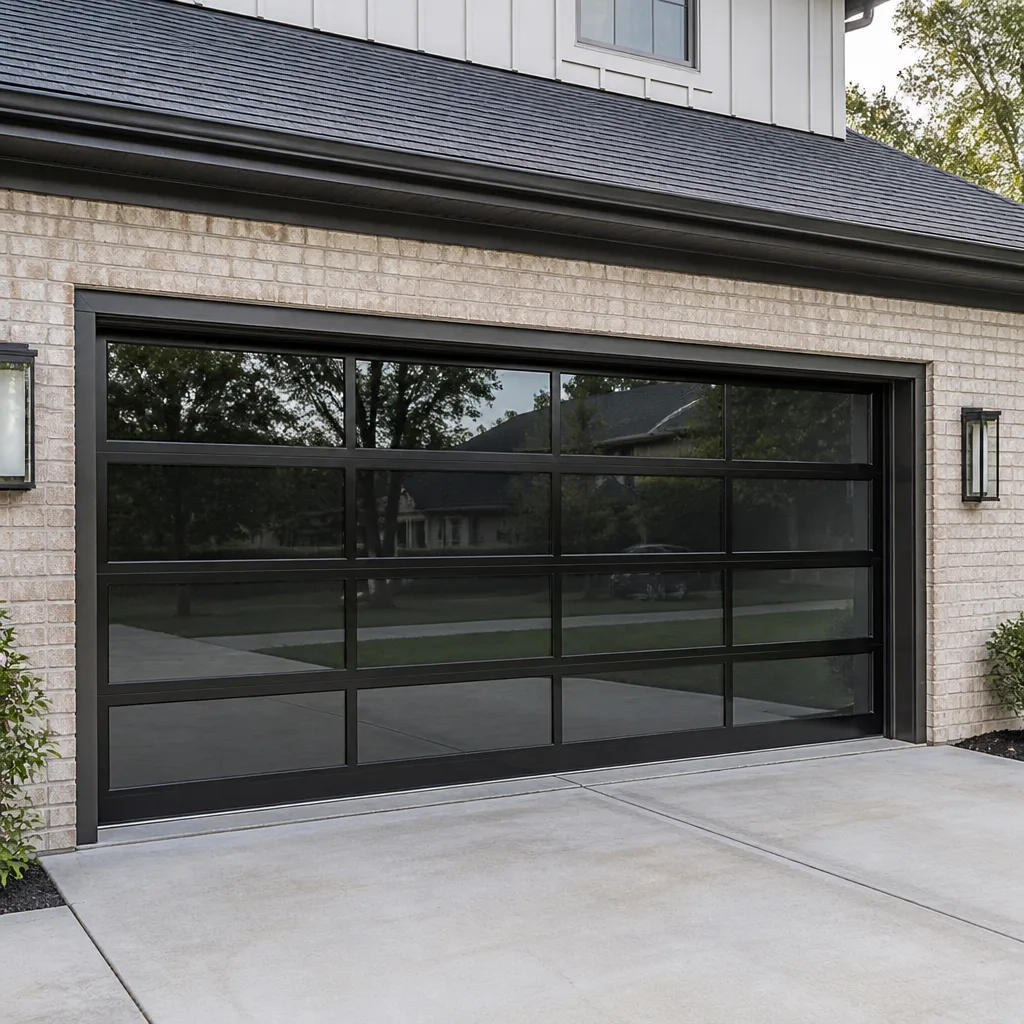 Full-view glass
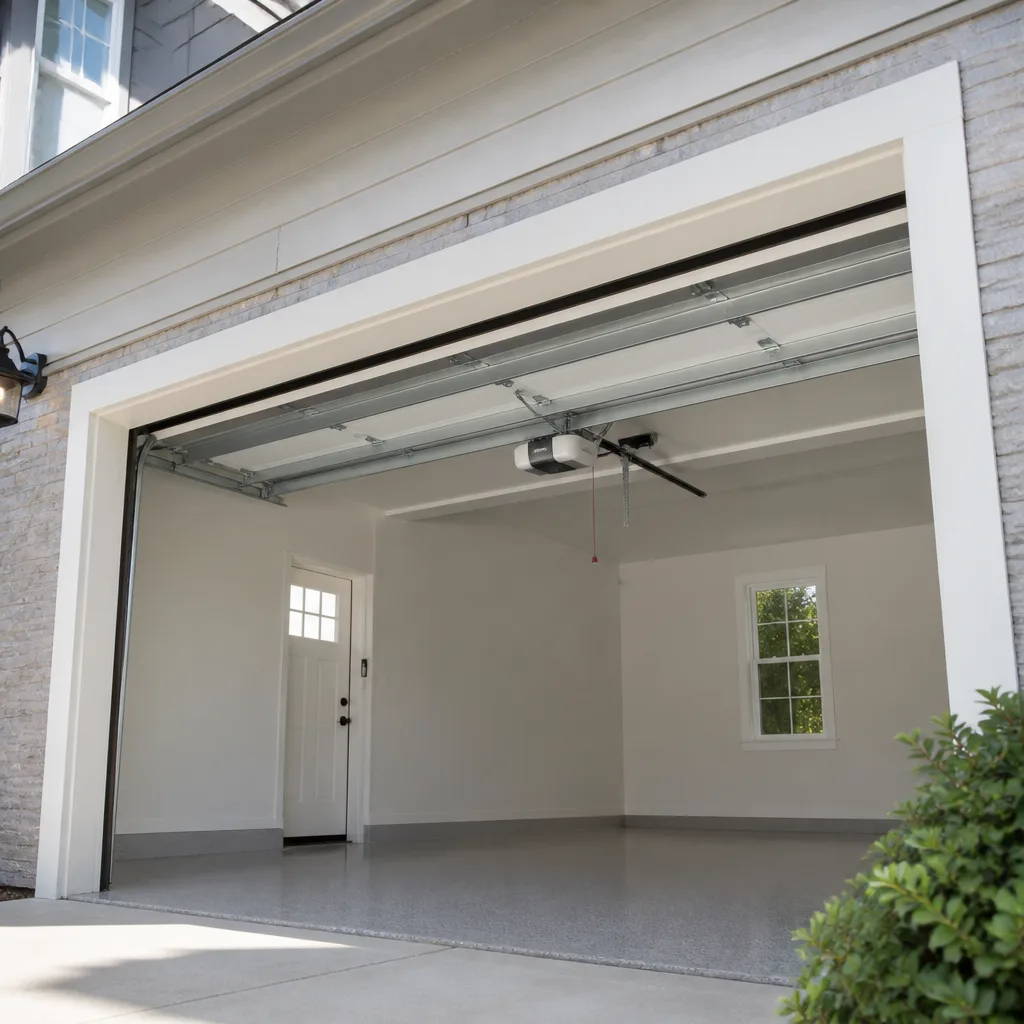 LiftMaster openers
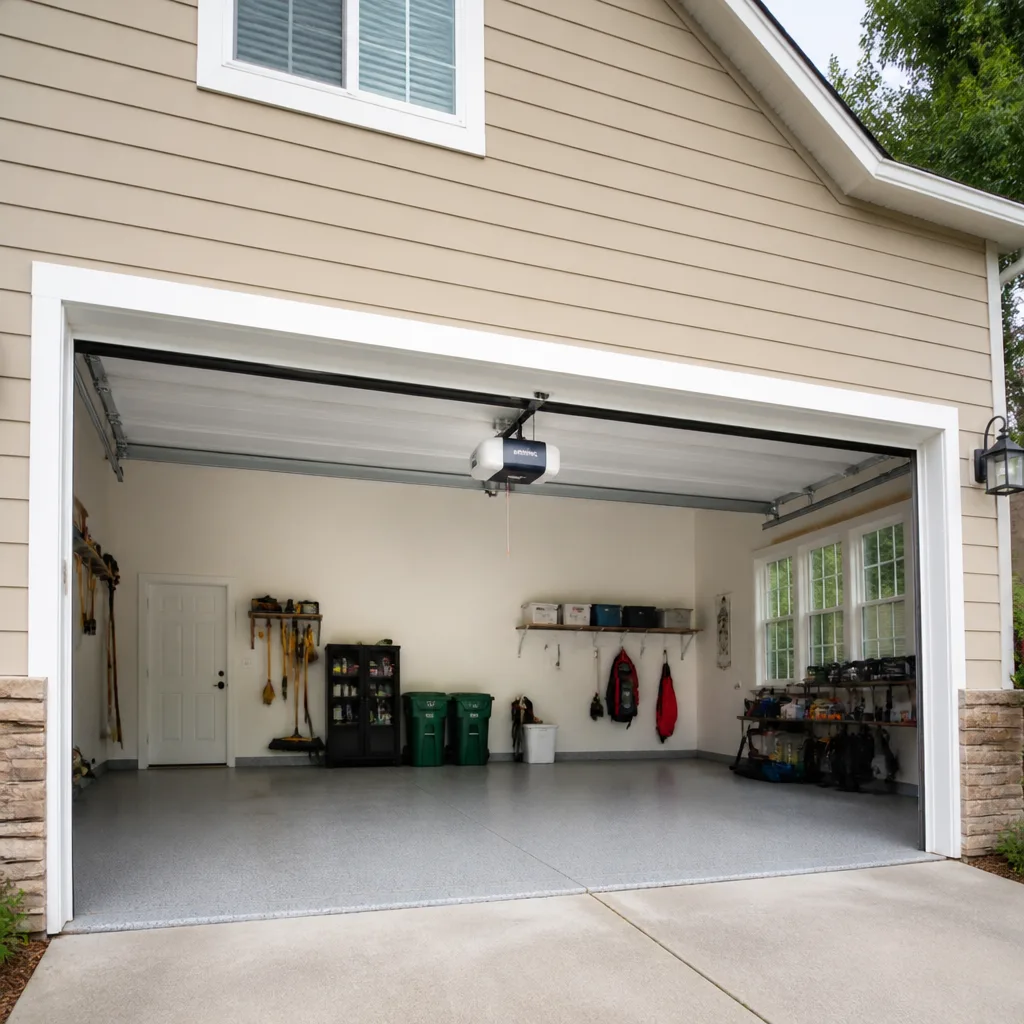 Chamberlain openers
Full 25-point door and opener safety check with every visit - springs, cables, rollers, tracks, and your LiftMaster or Chamberlain opener included
You get a price before we start. It does not change when the pro arrives.
Get your free estimateGarage Door Emergency Preparedness Guide for Norwalk Homes
Most garage door advice is written for the moment something breaks. That’s too late. The homeowners who get through a power outage, a heavy storm, or a snapped spring without a real emergency are the ones who spent twenty quiet minutes months earlier finding the red release cord, testing it, and writing a model number on the inside of the door frame. A garage door is the biggest moving part on your house, and it fails under load: the load of a storm, the load of a cold night, the load of an opener that’s been fighting a stiff track for years. This guide walks through preparation, not just response, for homes across Norwalk. You’ll learn the manual release procedure, the pre-storm checks that keep wind and water out, how to handle a spring that breaks mid-open, and what to have ready before you call anyone.
Quick Answer
Garage door emergencies in Norwalk usually come down to a handful of causes: a broken spring, a dead opener or a power outage, a door that’s stuck open or won’t close, or a cable that’s slipped off its drum. The single most useful thing you can do before any of that happens is find and test the manual release cord on your opener, then write down your door and opener brand and model. If a spring or cable has failed, don’t force the door. Call a technician, because those parts are under extreme tension and cause serious injuries to homeowners who try to fix them.
Styles & brands we work with
- Raised-panel steel
- Carriage house
- Modern flush
- Full-view glass
- LiftMaster openers
- Chamberlain openers
Table of Contents
- How to Manually Release Your Garage Door (and the Mistakes That Break the Cord)
- Pre-Storm Checklist for Norwalk’s Weather Events
- What to Do When a Spring Breaks Mid-Open
- Power Outages and Battery Backup Options
- Emergency Contact Protocol: What to Have Ready Before You Call
- Stuck Closed? Fast Triage When You Need Your Car
- Cold-Weather and Winter Preparation
- Prevention: The Annual Ten-Minute Check
How to Manually Release Your Garage Door (and the Mistakes That Break the Cord)
Every residential garage door opener has a manual release, and it’s the first thing to locate before you need it. On most openers the release is a red handle hanging from a cord, usually attached to the trolley that rides along the rail above the door. When you pull it down and back, the trolley disengages from the door arm so you can lift and lower the door by hand. The exact feel varies by brand. LiftMaster and Chamberlain openers use a very similar trolley design, while Genie and Craftsman units sometimes have a shorter cord that’s harder to reach. On Raynor openers the release is often tucked closer to the door panel. Take a moment now, while everything works, to see where yours sits.
Here’s the procedure for a safe manual release:
- Stand clear of the door’s path. Doors can drop fast once the opener lets go.
- Close the door completely first if it’s open, or have a second person steady it.
- Pull the release cord straight down and toward the motor until you feel the trolley click out of gear.
- Lift the door slowly to about waist height and let go. A properly balanced door stays put. One that slams down has a spring problem.
- Move the door by hand only, never by re-engaging the opener while the door is mid-travel.
The mistakes that cause the cord to disengage permanently, or lock you out entirely, are consistent. Never yank the cord sideways, never pull it while the opener is running, and never leave the door in the released position for weeks at a time. If the cord snaps inside its housing, you can still usually reach the trolley by climbing a step ladder, but skip that if the springs are buzzing or the door is visibly heavy. This is also where we see homeowners try to lift a door with a dead spring by brute force, which bends panels. Our garage door repair team handles the release and re-engagement safely when the opener’s fighting back.
Pre-Storm Checklist for Norwalk’s Weather Events
Norwalk sits in a river-and-harbor flood zone, and storms that come up the coast bring wind, rain, and the power outages they cause. Garage doors fail in storms for two reasons: wind load pushing on a door that isn’t sealed or reinforced, and water backing up through a door threshold that’s below grade. Before a forecast event, a quick walk-through pays for itself.
- Test the door’s seal. Close it and look for daylight or a visible gap along the bottom weatherstrip and the side frames. A gap lets wind inside and lets water in under the door.
- Check the side and top weatherstop. Worn rubber that’s cracking or hanging loose won’t hold against wind-driven rain.
- Clear the tracks. Small debris in the vertical tracks makes the door bind, and a binding door can stall mid-storm when you need it closed fast.
- Test the balance. Release the opener and lift the door. If it wants to fall, the springs are weak. That door may not hold against wind load.
- Secure anything stored against the door. Ladders, shelf units, and boxes pressing on the inside of the door can transfer wind force to the panel hinges.
- Know your opener’s status. If your opener has battery backup built in, note what it does when power fails. If not, plan for manual release.
Doors that won’t seal properly should be looked at before the storm, not during it. If you find a door that seals poorly or won’t hold at half-open, that’s a repair issue, and a technician can often adjust the door or replace weatherstrip before the weather turns. If you’re not sure what the gap means, call us and describe it. For Norwalk homeowners with older Raynor or Genie doors, worn weatherstop is the single most common storm-related repair we quote.
What to Do When a Spring Breaks Mid-Open
A spring breaking while the door is going up is the worst-case scenario for a garage door. The door is held open by the opener and the tracks, but nothing is holding it against gravity if the opener lets go. The spring break sounds like a bang, and the door usually stops unevenly or hangs at an angle. Resist the instinct to lower it by pulling the opener arm or yanking the release cord carelessly. The door can come down hard and bend or break the bottom panel.
Here’s the safe sequence:
- Stop the opener and unplug it, or turn it off at the breaker. You don’t want it re-engaging while you’re handling the door.
- Do not pull the release cord unless you can support the door. With a broken spring the door has no lift assist; it may be much heavier than you expect.
- If the door must come down, get help. Two adults on a step ladder, one on each side of the bottom panel, lowering slowly and steadying the door, is the only safe way.
- If the door can stay up, leave it up and secure the space. Block access under the open door. An overhead door with no spring is a falling hazard.
- Call for spring service before touching anything else. A snapped torsion spring or extension spring requires trained hands to replace.
This is why spring repair is specialist work. The springs on a residential door are wound to hundreds of pounds of tension for the life of the door, and a wrong move can cause injury or worse. Our garage door spring repair technicians handle tension and torsion work whenever a spring lets go mid-open, and they can tell you on the phone whether the door has to stay up or can come down safely. If the door is at an angle and clicking in the tracks, don’t run the opener to try to correct it. Let it sit.
Power Outages and Battery Backup Options
When the power goes out in Norwalk, the first question most homeowners ask is whether their garage door will still open. The answer depends on the opener. Many modern openers include a battery backup built in, which keeps the door moving during an outage for a set cycle count before the battery needs a charge. Units without built-in backup need a separate add-on battery. The difference matters in a storm, and it’s the reason we tell homeowners to check the opener manual or the model number before a storm.
Here’s what to know:
- Built-in backup: Many current LiftMaster and Chamberlain openers ship with backup batteries already inside the motor head. Testing one is simple: with the door closed and power off, run the opener once and see whether it moves.
- Add-on kits: Genie and Craftsman openers often need a separate backup kit that plugs into the opener. These are worth installing if your opener has the right connections.
- Manual release is still the fallback. Backup batteries run out. Know where your release cord is before the power fails.
- Battery condition: Backup batteries age, and a dead battery won’t save the day. Test once a season.
If your opener is old and you want a real power-outage plan, a replacement opener with built-in backup is worth pricing. That decision is usually part of a broader upgrade conversation, and our garage door opener repair team can look at your current unit and tell you whether adding backup makes sense. If you’re not sure what you own, bring the model number to the call.
Emergency Contact Protocol: What to Have Ready Before You Call
The fastest way to get a technician moving on a garage door problem is to call with the right information in hand. On a bad day, that means a quicker diagnosis, a faster parts match, and less time standing in your driveway. Every second you spend guessing costs you time. Here’s what to have ready:
- Door brand and model. Clopay, Amarr, Wayne Dalton, Raynor, and other brands each have different hardware. Knowing the brand tells the technician what to expect before the truck rolls.
- Opener brand and model. LiftMaster, Chamberlain, Genie, and Craftsman openers fail in different ways, and parts are specific. The model number is usually on a sticker on the back or inside the motor head.
- What happened, exactly. “Broke while opening” and “stopped working overnight” point to different things. A spring snap sounds different from a cable slap.
- What state the door is in now. Open, closed, half-open, or hanging at an angle. That changes the safety instructions you’ll get on the phone.
- Any safety sensor behavior. If the door reverses immediately, the sensors are likely blocked, misaligned, or failing.
- Whether anyone is injured or trapped. Say that first.
We’re a dedicated garage door specialist at Norwalk Garage Door Repair Pros, not a general handyman operation, and that’s the reason we can take a model number and know whether it’s a spring, an opener travel limit, a worn gear, or a bad logic board. We’re factory-familiar with the major brands, from Clopay and Amarr doors to LiftMaster, Chamberlain, Genie, Craftsman, and Raynor openers. Emergency service is available, and our technicians have up to 13 years of experience with these systems. Have your phone ready, but keep this list of details nearby.
Stuck Closed? Fast Triage When You Need Your Car
A door that won’t open is the classic morning emergency. Before you call, a few quick checks tell you whether it’s a simple fix or something a technician should handle. Work through this in order:
- Check the power. Test the nearest outlet. If your opener has battery backup, listen for the opener’s beep when it switches to battery. If it beeps but the door won’t move, the safety sensors are likely the issue.
- Look at the safety sensors. The photo-eye sensors at the base of the door tracks blink when they’re misaligned, blocked, or dirty. Wipe the lenses with a soft cloth and check the alignment light on each side. A common culprit is a plant, a garbage can, or a bike that’s drifted into the beam.
- Try the manual release. If the door lifts by hand easily, the door is fine and the problem is in the opener or the sensors. If it’s heavy, stop and call a professional.
- Check the breaker. If a board keeps tripping, don’t reset it repeatedly; let a technician investigate.
- Look at the wall button or remote. A dead wall button can point to a wiring issue. A remote that’s stopped working after a power outage usually needs re-pairing with the opener.
If you have a car blocked, say so on the call. Emergency service exists for this. We’ll talk you through a safe manual release on the phone if possible, and if the door needs a technician, we’ll schedule it as quickly as the day allows. For Norwalk drivers with kids in car seats and a school run clock running, that call is the difference between twenty minutes and half a day.
Cold-Weather and Winter Preparation
Winter is when garage door hardware shows its weak points. Cold makes metal parts contract and stiffens rubber seals. It also puts the springs under more load because the door itself becomes harder to lift. In Norwalk, the first cold snap is when many of the seasonal garage door failures show up. The good news is that the fixes are mostly simple:
- Lubricate the moving parts. A garage door lubricant on the hinges, rollers, and springs (not the tracks) keeps operation smooth. Never use a standard household oil; it attracts dirt.
- Check the weatherstrip. Brittle, cracked rubber stops sealing, and that means a cold, drafty garage and a door that doesn’t hold against wind.
- Test the balance. A door that fails to stay open in fall will fail completely in winter.
- Clear snow and ice from the door path. Ice under the bottom panel can jam a door mid-travel.
- Watch the springs. Cold snaps cause more spring breaks than any other time of year, and the first cold morning on a Norwalk street is often when a tired spring lets go.
If your door is groaning, hesitating, or opening unevenly as the temperature drops, call before it stays down. A quick tune-up, and inspection of springs and cables, is a small job when it’s scheduled and a much bigger one when the door quits.
Prevention: The Annual Ten-Minute Check
One short check once a year prevents most of the emergencies in this guide. It’s the single easiest habit to keep. Set a reminder and do this walk-through:
- Balance test. Release the opener and lift the door to half-open. It should stay there easily. A door that slams is telling you the springs are weak.
- Release cord test. Make sure the cord is reachable and the trolley releases and re-engages smoothly. Learn the pull.
- Roller and hinge check. Look for cracks, wear, or wobble at the hinges and rollers.
- Cable check. Look for fraying on the steel cables at the drums. Frayed cable is a call-it-in situation, never a DIY fix.
- Sensor check. Pass your foot through the sensor beam to confirm the door reverses.
- Seal check. Inspect the bottom and side weatherstrip for gaps or cracking.
- Battery check. Replace remote batteries and test the opener’s backup battery.
- Opener force setting. Follow the manufacturer’s instructions to confirm the opener’s force settings haven’t drifted.
The release cord and the spring check are the two that matter most in an emergency. If you can only do one, do the release. Most of the trouble we see in Norwalk homes is a door behaving fine and then failing on the one day the owner needed it. Ten minutes in the fall is far better than a scramble in the dark.
Common Mistakes to Avoid
- Pulling the release cord while the opener is running. The trolley can jam or drop the door unevenly. Stop the opener first.
- Forcing a heavy door open by hand. A door with a snapped spring is a falling hazard. Two people, steady, slow, or wait for a technician.
- Ignoring a slow, heavy door until it stops completely. Spring wear shows up as hesitation long before it snaps. Norwalk winters are when tired springs give out.
- Leaving a door half-released after an outage. Re-engage the opener once power returns, or the next automatic cycle can strain the motor or bend a panel.
- Buying a remote or opener part by brand alone. Model numbers matter. A universal remote will not pair correctly with every opener; matching the exact model saves a return trip.
- Bypassing a safety sensor by taping it or propping it up. Sensors exist to stop the door on a person or a pet. Fix them, don’t defeat them.
- Trying to adjust a torsion spring or cable yourself. These parts hold hundreds of pounds of tension. One slip causes serious injury.
See the difference
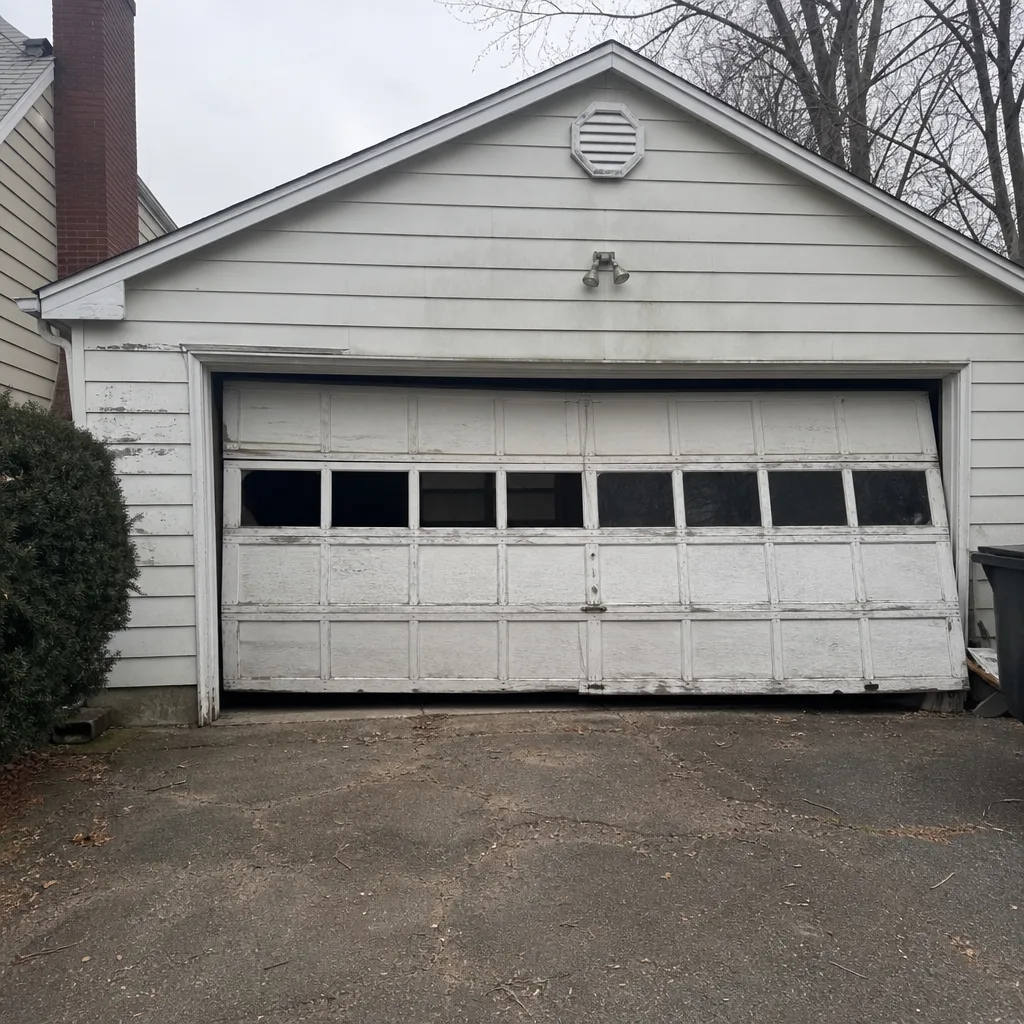 Before
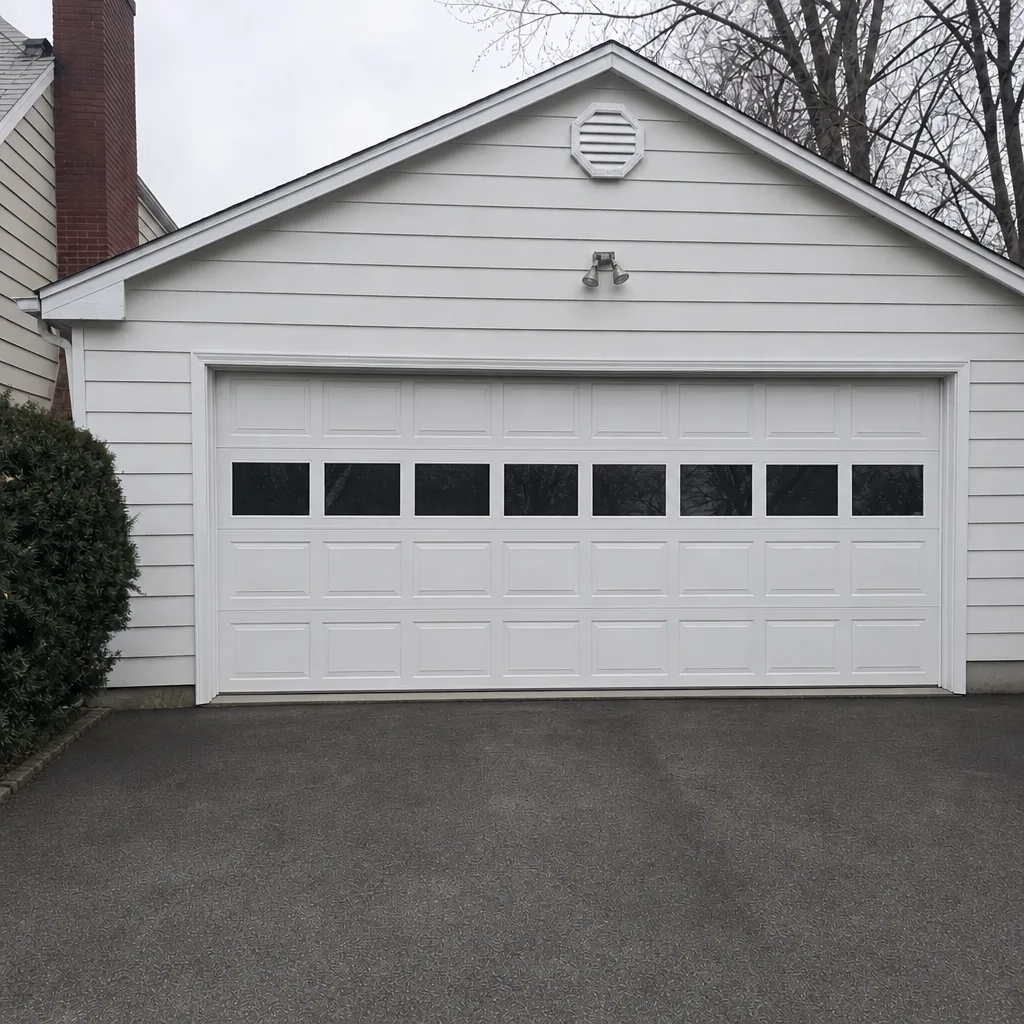 After
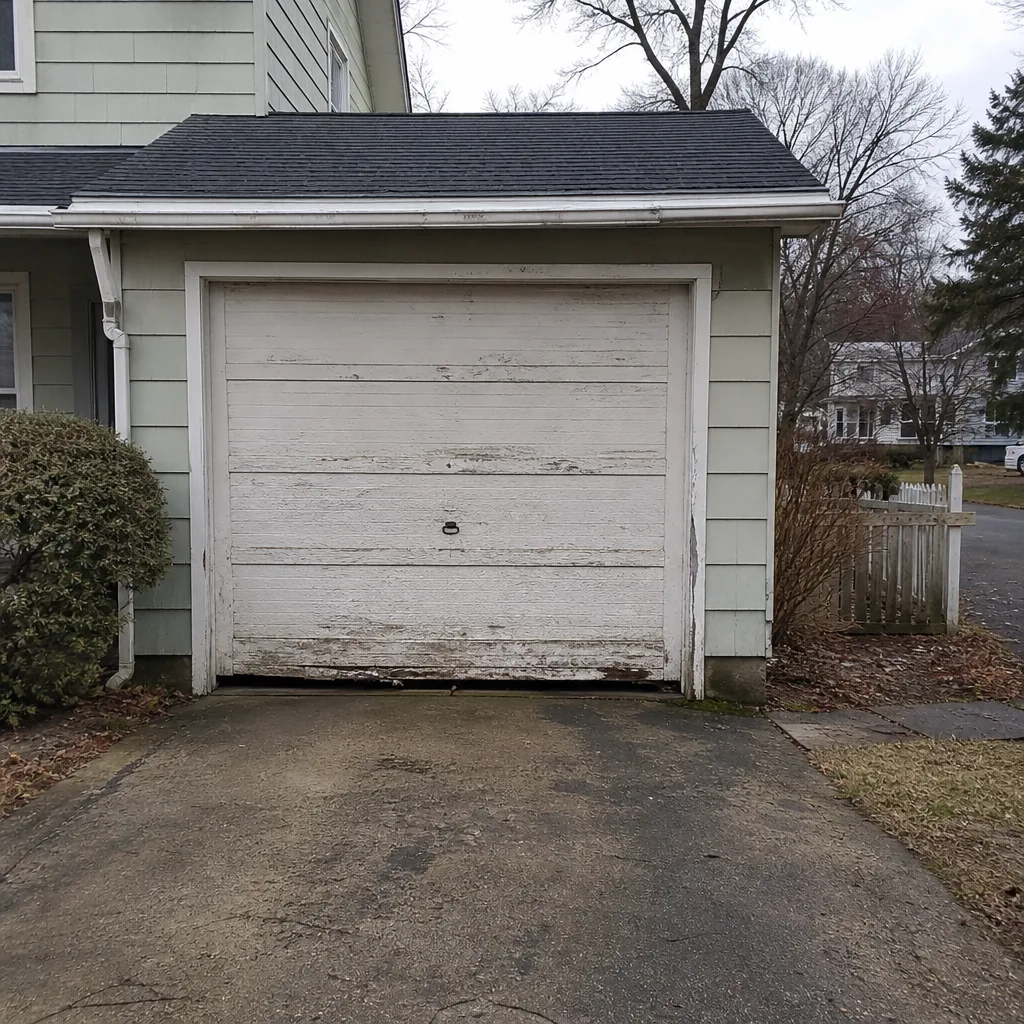 Before
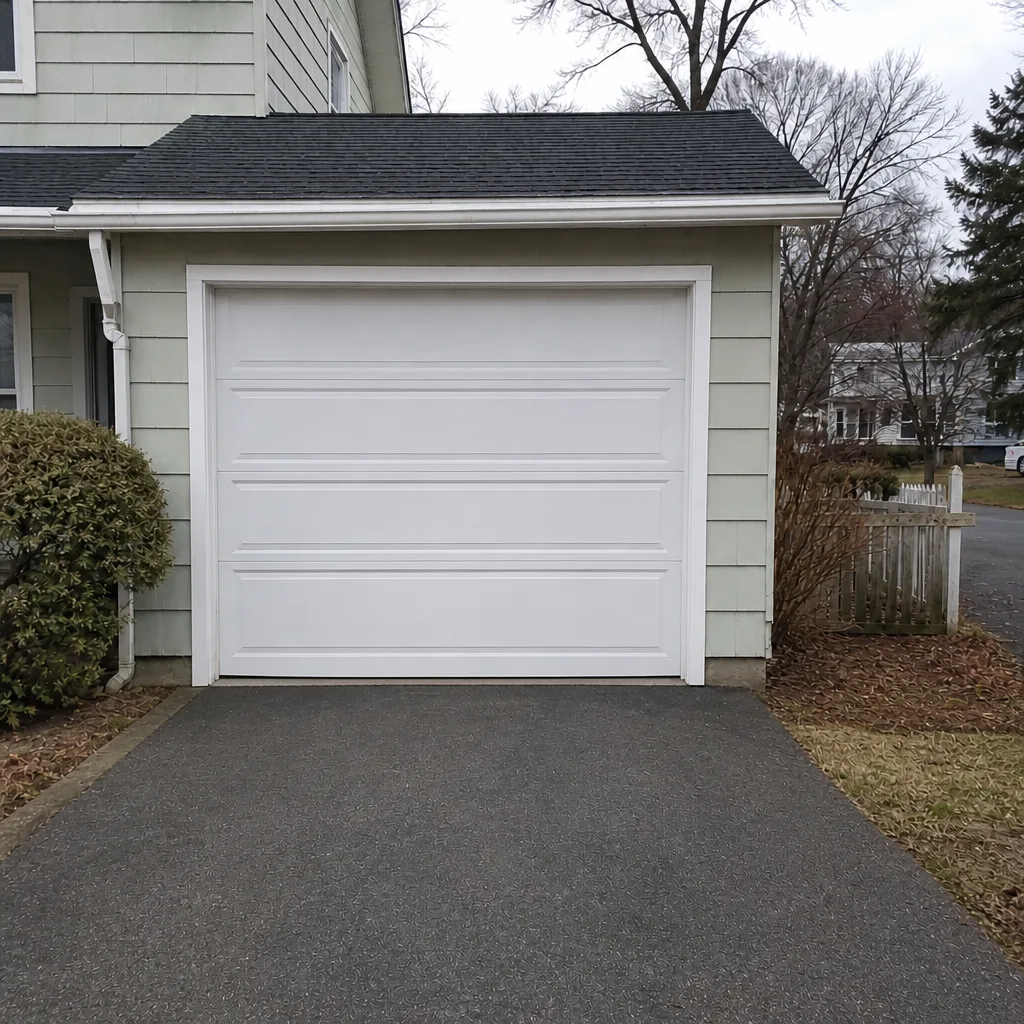 After
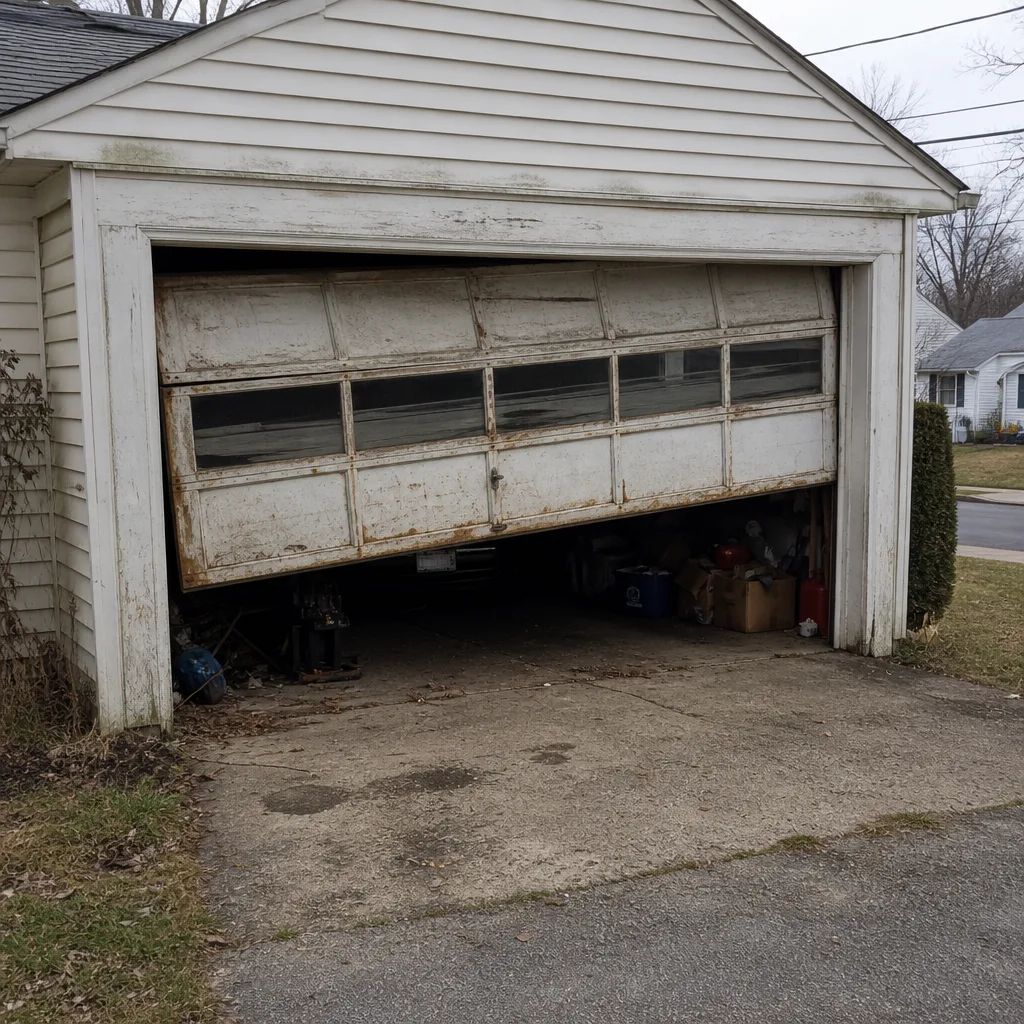 Before
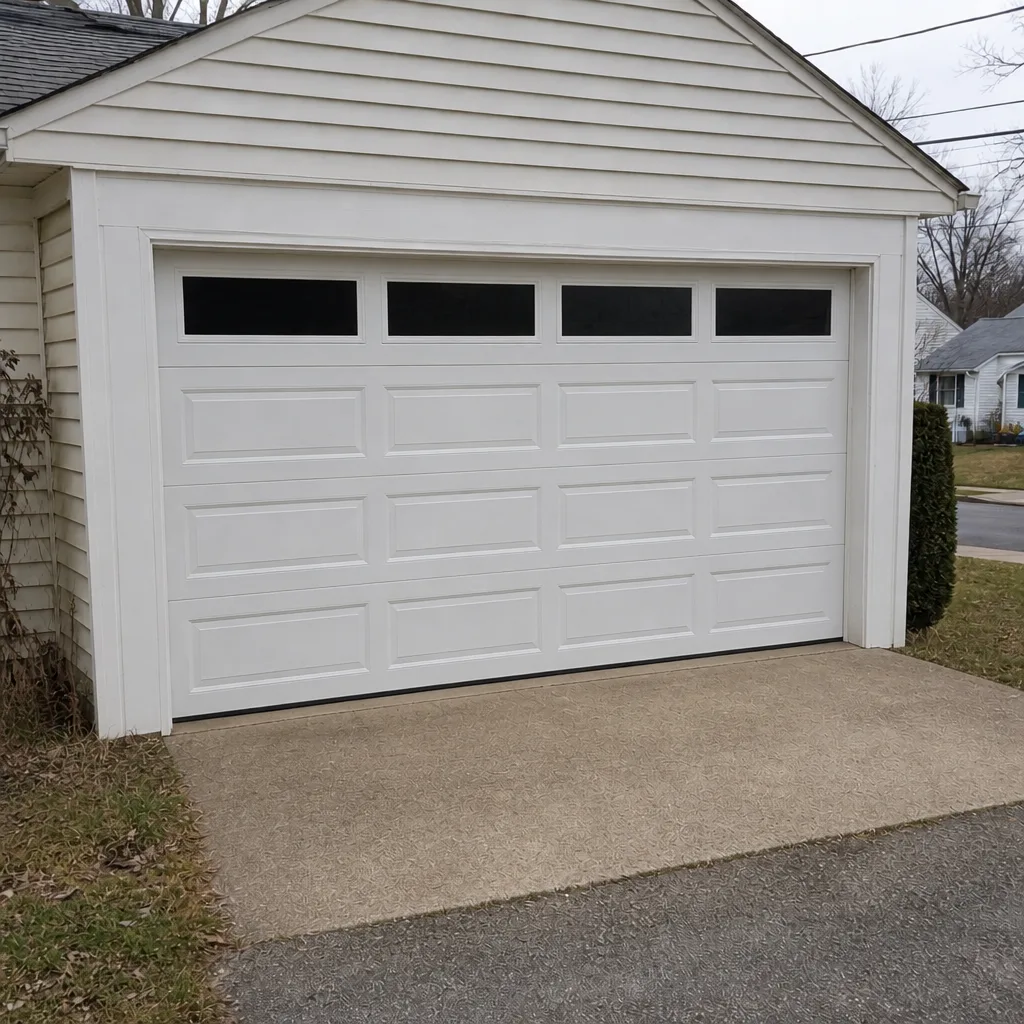 After
When to Call a Professional
Some problems are for a trained technician, full stop. Call us if any of these are true: a spring snapped, a cable is frayed or hanging, the door is stuck at an angle or has dropped on one side, the opener keeps tripping a breaker, or the door reverses at random. Those are safety issues, not maintenance calls. A trained pro can inspect, identify the failed part, and quote a fix before touching anything. If the door is stuck closed and you’re blocked in, say so first; our emergency service is designed for exactly that kind of day. Norwalk Garage Door Repair Pros offers free estimates in Norwalk. Call (855) 337-1321. Our technicians have up to 13 years of experience, and we work on the big brands, so we’ll know your model before we arrive.
Frequently Asked Questions
Yes, in most cases. Every opener has a manual release; you pull the cord down and toward the motor to disengage the trolley, then lift the door by hand. A door that’s balanced will stay in place. If it’s heavy, don’t force it. Call (855) 337-1321 and we’ll walk you through the safe steps.
Check the model number on the opener’s motor head, or look in the manual. Many LiftMaster and Chamberlain units have built-in backup; Genie and Craftsman openers often need a separate kit. Testing is simple: turn off the power and see whether the opener runs. Call us if you’re unsure and we’ll match your model.
Stop the opener, don’t touch the spring or cable, and keep people out from under the door. If the door is stuck open, leave it up and taped off. If it’s down and the door is heavy, don’t force it. Spring repair is specialist work because the springs are under extreme tension. Call (855) 337-1321.
Check the safety sensor alignment light on each side, then the wall button and the breaker. If the door still won’t close, the issue is likely a travel-limit or logic-board problem that needs a technician. Our garage door opener repair team can diagnose it. Call and tell us the opener model.
Spring life depends on how many cycles the door runs and the door’s weight. A spring used several times a day wears out faster than a light-use spring. Cold winter mornings put extra load on springs. If your door is hesitating, that’s the time to have it checked, not after it snaps.
No. We’ll give you a written estimate and confirm it with you before any work starts. If we find something extra during the job, we stop and discuss it before doing anything. That’s how a repair call should work. Call (855) 337-1321 for an exact quote.
The Bottom Line
Garage door emergencies in Norwalk are usually predictable, just not convenient. The door that quits on a stormy night is a door that’s been tired for months. Learn your release cord, keep your door and opener brands written down, test the springs and balance once a year, and know when to stop and call a professional. That preparation turns a panic situation into a quick phone call. If something’s off now, don’t wait for the next weather event. We can help today.
Norwalk Garage Door Repair Pros is a dedicated garage door specialist. We repair doors and openers across the major brands, handle spring service, and offer emergency garage door service for locked-out and locked-in situations. Call (855) 337-1321 for a free estimate and get your door back to normal.
Written by the team at Norwalk Garage Door Repair Pros.