Last updated November 21, 2026
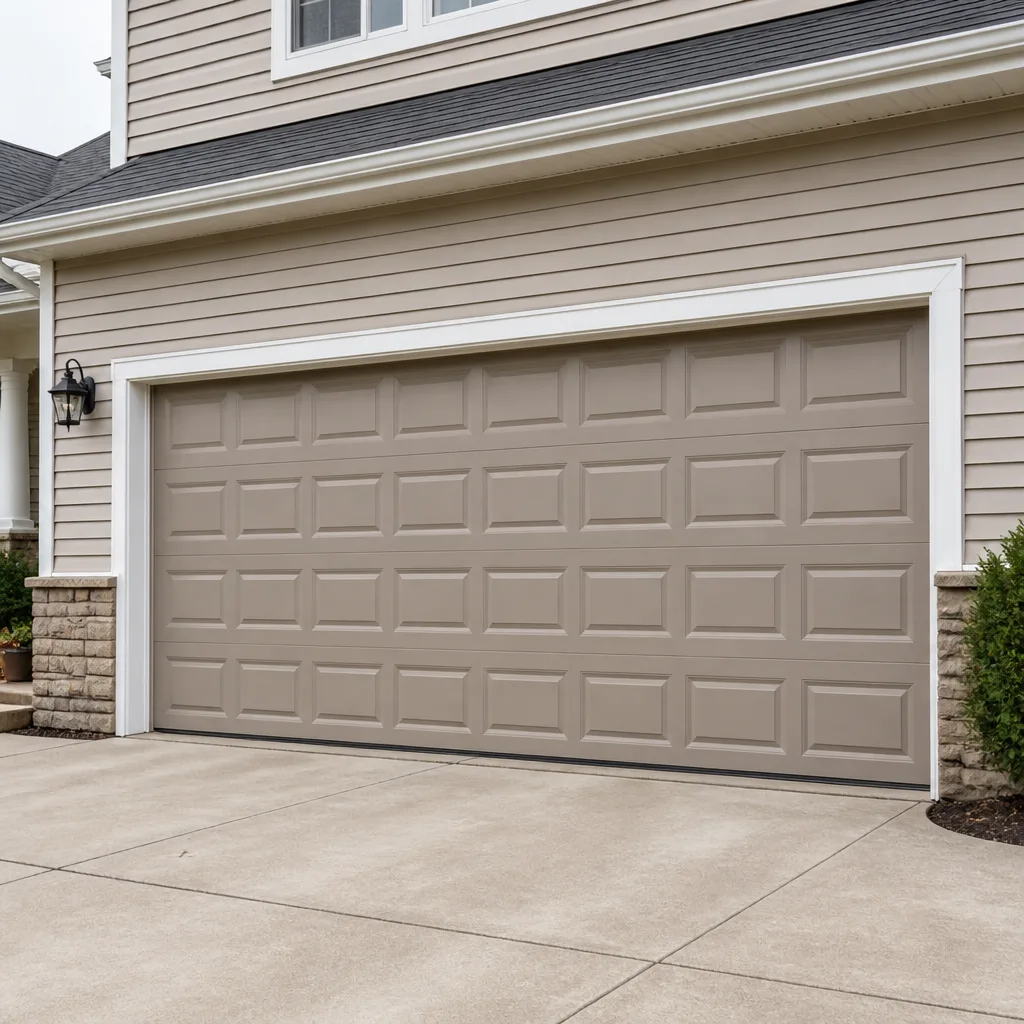 Raised-panel steel
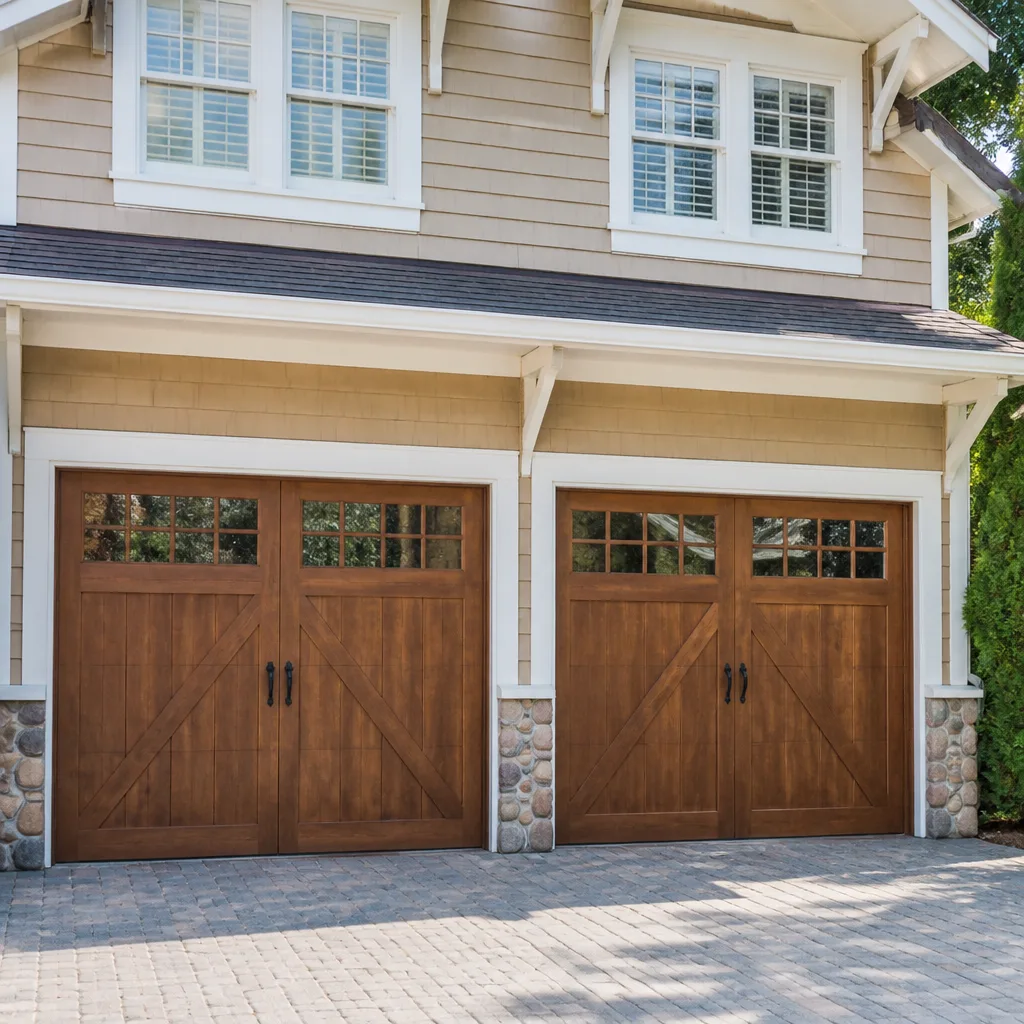 Carriage house
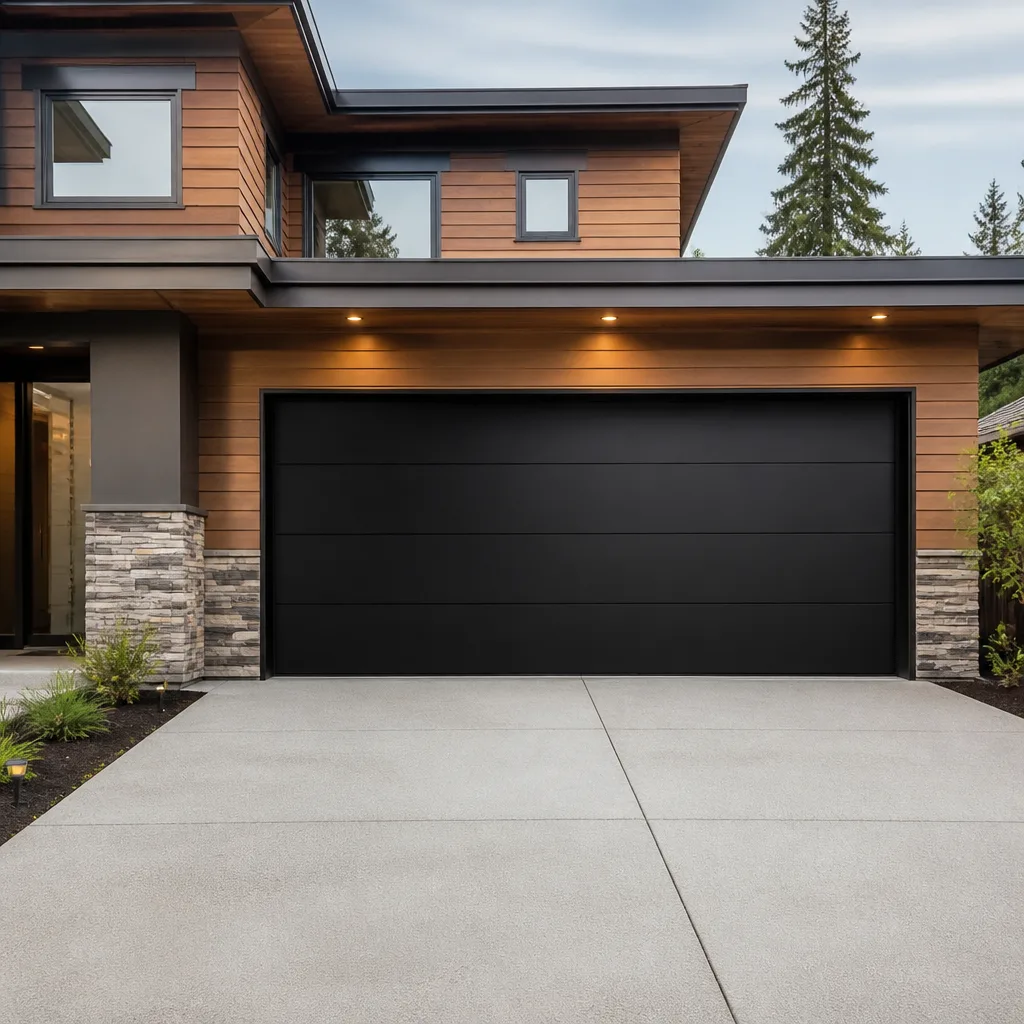 Modern flush
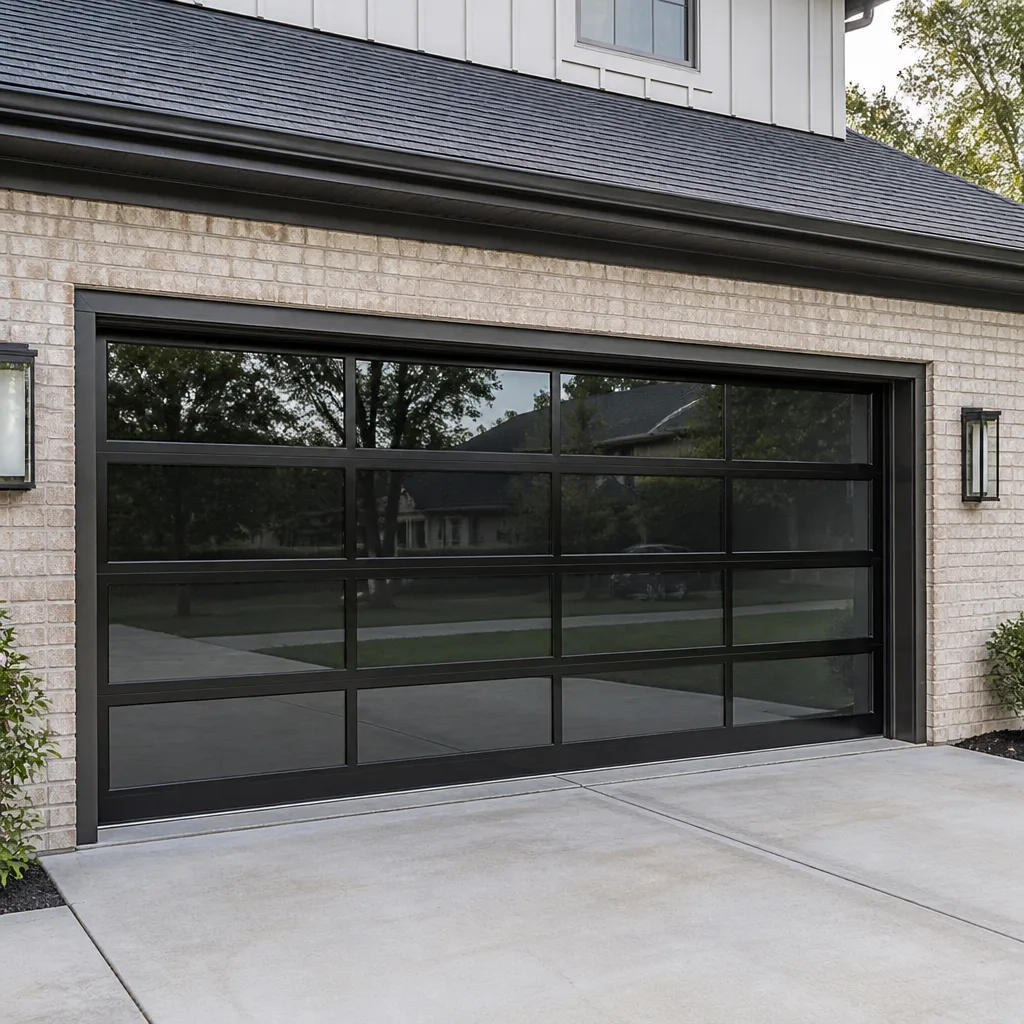 Full-view glass
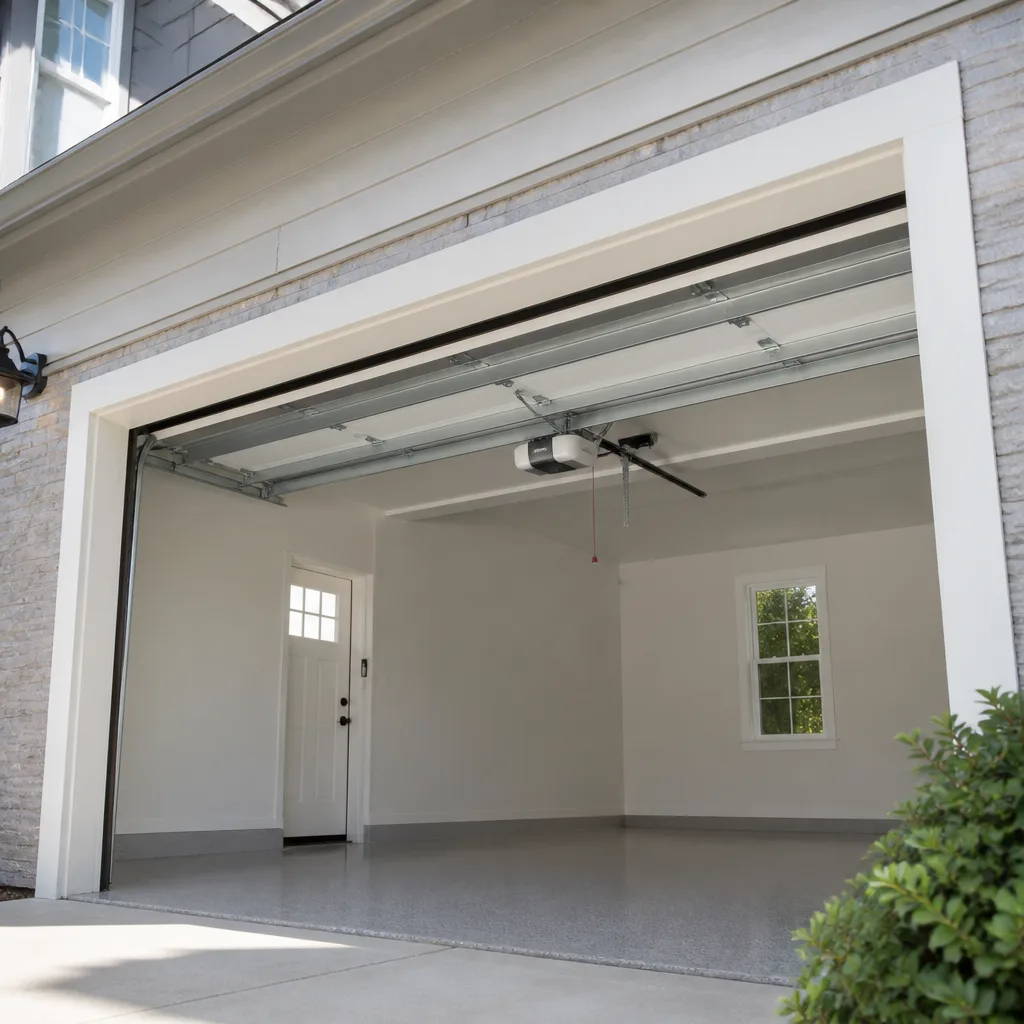 LiftMaster openers
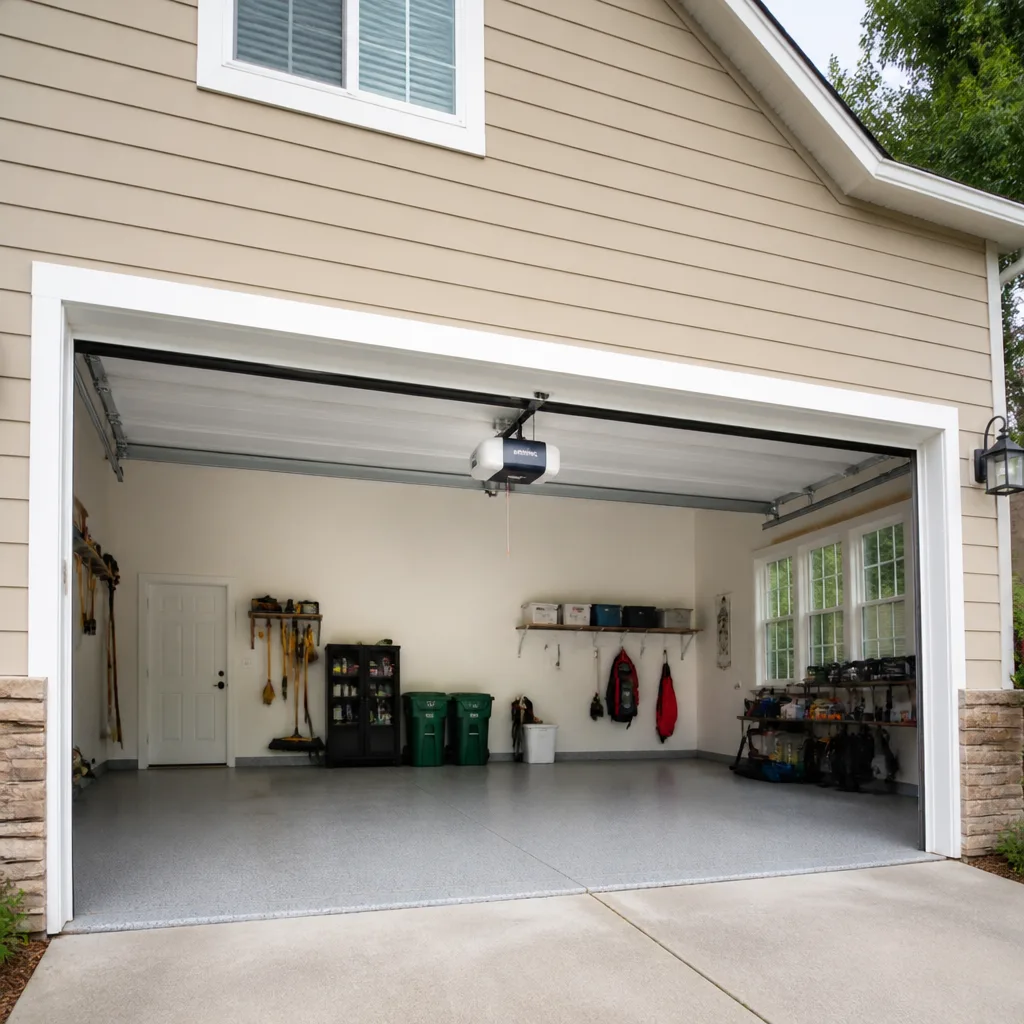 Chamberlain openers
Full 25-point door and opener safety check with every visit - springs, cables, rollers, tracks, and your LiftMaster or Chamberlain opener included
You get a price before we start. It does not change when the pro arrives.
Get your free estimateGarage Door Cost Breakdown: The Norwalk Homeowner’s Reference for 2026
Most Norwalk homeowners collect three garage door quotes and still can’t tell which one is fair, because each contractor describes the same physical work in different words. One quote says “spring replacement, labor included.” Another says “torsion spring assembly plus install labor plus disposal.” A third says “service call.” The dollar totals look similar until you start asking what’s inside them. This reference breaks a garage door bill into its actual parts so you can compare any three quotes line by line, know which numbers are typical for Norwalk in 2026, and spot the charges that quietly appear after the work is done. We’ll cover repair pricing, new door costs by material, the fine print on quoting structures, and the local factors that push a job up or down.
Quick Answer
In Norwalk, a typical garage door repair in 2026 runs roughly $150 to $450, with a single torsion spring replacement landing around $180 to $340 (a matched pair usually runs about double because both springs are replaced together). A new opener installed costs about $350 to $750, and a full new door with installation ranges from roughly $1,200 for a basic steel single door to $4,500 or more for a large insulated wood or composite door. These are estimates, and the written quote you receive after an on-site measure sets the final price.
Styles & brands we work with
- Raised-panel steel
- Carriage house
- Modern flush
- Full-view glass
- LiftMaster openers
- Chamberlain openers
Table of Contents
- What’s Actually Inside a Garage Door Quote
- 2026 Repair Costs for the Four Most Common Norwalk Jobs
- Why Spring Replacement Cost Varies by $150 or More
- New Door Cost Breakdown by Material
- Hidden Costs That Show Up After the Quote
- How to Convert Any Quote Into a Comparable Format
- What Makes Norwalk Jobs Different
- Why the Brand on Your Door Matters to the Price
What’s Actually Inside a Garage Door Quote
Every garage door quote, no matter how it’s worded, contains four cost components. Once you can name them, you can compare any two estimates on equal footing.
- Parts. The physical components: springs, cables, rollers, hinges, panels, opener, track. Parts have a wide range because a builder-grade spring and a high-cycle spring for the same door differ in wire gauge, coil count, and rated cycles.
- Labor. The time to remove the old part, install the new one, adjust tension, balance the door, and test the safety reverse. Labor varies with the complexity of the job, not the price of the part.
- Service or trip charge. Some companies charge a flat fee to come out and diagnose. Others roll that into the repair price. A quote with a separate trip charge isn’t automatically worse, but it needs to be counted.
- Disposal and haul-away. Old springs, cables, panels, and doors have to go somewhere. Some quotes include it, some add it after the work, and some leave the old door on your curb for you to handle.
When a quote says “labor included,” it usually means the labor is bundled into a single number alongside the part, and you can’t see the split. That’s fine if the total is fair, but it makes comparison harder. When a quote says “parts plus labor,” you can see both numbers, which is easier to compare but doesn’t tell you whether the part price is typical. “Parts plus labor” quoting is more common on new installations because the parts (the door, the track, the hardware kit, the opener if you’re buying one) are the bulk of the cost. Bundled “labor included” quoting is more common on small repairs where the part is inexpensive and the labor dominates.
Neither structure is dishonest. But if you’re going to compare three quotes, ask each contractor to break out these four components in writing. Any reputable shop will do it. If a contractor won’t itemize, that’s information.
2026 Repair Costs for the Four Most Common Norwalk Jobs
Spring replacement, cable repair, panel replacement, and opener swap make up the overwhelming majority of what we see on Norwalk jobs. Here’s how those jobs price in 2026, with the parts and labor split visible.
| Job | Typical Total | Parts Range | Labor Range |
|---|---|---|---|
| Single torsion spring replacement | $180 – $340 | $60 – $150 | $120 – $190 |
| Matched pair of torsion springs | $360 – $680 | $120 – $300 | $120 – $190 |
| Cable replacement (one side) | $140 – $280 | $40 – $100 | $100 – $180 |
| Panel replacement (single section) | $200 – $600 | $120 – $400 | $80 – $200 |
| Opener replacement, installed | $350 – $750 | $180 – $450 | $170 – $300 |
| Roller and hinge tune-up | $120 – $250 | $40 – $120 | $80 – $130 |
These ranges assume a standard residential door and normal access to the hardware. A high-lift door, a door with unusual spring configurations, or a job where the track is bent and needs realignment will land at the top of the range or above it. The same physical job can quote at $200 or $900 depending on which components are included and whether the contractor is replacing just the failed part or the matched system. That’s the comparison problem in a sentence.
Two things to watch. First, a matched pair of torsion springs should almost always be replaced together, even if only one has failed: two springs of the same age and cycle rating, working as a pair, don’t fail separately for long. If a contractor quotes you a single-spring price and then adds the second spring as a surprise, that’s a quoting problem, not a pricing one. Second, a cable replacement is often paired with a spring replacement because a failed spring can snap or jump its cable. If you’re quoted both, ask whether the cable actually failed or is being replaced preemptively. Preemptive replacement is reasonable on an older door but should be a line item you can see and choose.
If the door is stuck or won’t close and you need it working again, a free estimate for garage door repair is the fastest way to a real number.
Why Spring Replacement Cost Varies by $150 or More
Springs look identical from the outside and are anything but identical inside. The price difference between a low-end and high-end spring replacement on the same door can easily reach $150, and the cheaper option is almost always a false economy.
Three things separate one spring from another:
- Spring type. Torsion springs (the horizontal spring on a bar above the door) cost more than extension springs (the vertical springs that run along the track on each side). Torsion is the better system on a modern door and is what most Norwalk homes built in the last few decades have.
- Wire gauge. A heavier wire gauge holds more tension and lasts longer than a lighter gauge in the same housing. Heavier gauge costs more per spring. It’s not a sales pitch; it’s the same reason heavy-duty springs are used on commercial doors.
- Cycle rating. Springs are rated in cycles (one open-plus-close is one cycle). Industry-standard springs are typically rated at 10,000 cycles. High-cycle springs rated at 20,000 or more cost more but last roughly twice as long. On a busy household door that opens four times a day, the difference can mean years.
When you’re comparing spring quotes, ask for the cycle rating and the wire gauge on the quoted spring. A quote that doesn’t state them may be using the cheapest spring available. A quote that states “10,000 cycle, .225 wire” is telling you what’s going into the door and roughly how long to expect it to last. For a single spring, the typical Norwalk range is $180 to $340; a matched pair is about twice that. The floor of that range buys a standard spring; the top of it buys a high-cycle spring and the labor to install it.
Spring repair is dangerous work. A torsion spring under tension can release enough energy in an instant to cause serious injury, and a homeowner who tries to unwind or replace one without the proper winding bars and knowledge is risking a lot. We’ll say plainly: leave the spring to a trained technician. Our team handles garage door spring repair as a specialty, and we’ll tell you honestly whether the spring needs replacing or just an adjustment.
New Door Cost Breakdown by Material
A new door is where the price range widens the most, because the door itself, not the labor, is the main cost. Here’s how the materials price in Norwalk in 2026, with installation labor included in each range.
- Steel, single door, uninsulated: about $1,200 to $1,900 installed. The most budget-friendly option. Fine for an attached garage in a milder climate, though it offers no thermal benefit.
- Steel, single door, insulated: about $1,700 to $2,700 installed. The most common choice for a home where the garage shares a wall with living space. The insulating layer cuts heat transfer and dampens sound.
- Steel, double door, insulated: about $2,400 to $3,800 installed. The wider span means more material and a heavier door, so the opener needs to be sized for it.
- Wood, single door: about $2,200 to $3,800 installed. Warmer look, higher maintenance. Requires refinishing every few years, especially on the side of the door that catches weather.
- Composite or engineered wood: about $2,600 to $4,200 installed. Looks like wood without the annual refinishing. Higher upfront cost, lower upkeep.
- Custom architectural doors: $4,500 and up. Carriage-house styles, oversized doors, special window configurations, and non-standard sizes all push the price up because they’re built to order.
Installation labor is roughly 15 to 25 percent of the total on a new door. The rest is the door, the track, the hardware, and any opener you’re buying alongside. A new door replacement is measured and scheduled, so the timeline runs days to weeks depending on the door. The written quote after the free measure is the price you pay, and any reputable installer will hold it.
One local consideration: Norwalk housing stock spans a wide range of ages and construction styles. A pre-war home often has a non-standard door opening or a detached garage with a different track configuration than a postwar home, and both can affect the price of a door that fits correctly. A proper measure catches this before the door is ordered.
Hidden Costs That Show Up After the Quote
The quote is one number. The bill is sometimes another. These are the line items that most often appear after the fact, and knowing to ask about them upfront is the simplest way to protect yourself.
- Disposal and haul-away. An old door, old springs, old track, and old opener all need to be removed from your property. Some quotes include it, some add it at the end. Ask explicitly whether disposal is in the price.
- Permit costs. Structural changes to the garage opening or a new door installation may require a permit in Norwalk, and the permit fee is usually separate from the contractor’s labor. Ask your contractor whether a permit is needed and whether the fee is in the quote. If you’re unsure, the city’s building department can confirm.
- Same-day or emergency premium. Emergency service is a real cost to the provider and often carries a premium. That’s fair, but ask the amount before you agree. A same-day call should still get a written price before any work starts.
- Parts substitution. A quote that lists one spring type and installs a cheaper one is a bait-and-switch. Make sure the quote names the part, the brand, and the cycle rating so there’s no ambiguity.
- Additional hardware. Rollers, hinges, and bearing plates often get replaced alongside springs or cables because they’re worn. Legitimate, but should be an itemized line on the quote, not a surprise add-on.
- Re-scheduling or return visit fees. If a part needs to be ordered and installed on a second visit, some companies charge a return trip. Ask upfront.
The basic rule: the price is quoted and agreed before any work starts. If a technician finds something on-site that wasn’t visible during the estimate, they should stop and quote the new line item before doing the work. Any honest contractor will do that. Any contractor who does the work first and tells you the price after is one to avoid.
How to Convert Any Quote Into a Comparable Format
Three quotes in three formats are useless until you put them on the same sheet. Here’s the process for making them comparable in about ten minutes.
- Ask each contractor for a written quote with four categories. Parts, labor, service or trip charge, disposal and haul-away. If they won’t split it out, write the components yourself based on what they tell you.
- Normalize the scope. Is each quote replacing the same part or parts? One contractor may be quoting a single spring, another a matched pair, and a third a spring plus cables. The apparent price difference is often a scope difference, not a rate difference.
- Ask for the part spec. For springs: type, wire gauge, cycle rating, brand. For openers: model, horsepower, belt or chain drive, whether it includes a battery backup. For doors: material, insulation, size, window configuration. A quote without a spec is a quote you can’t compare.
- Check the warranty. Labor warranty length and part warranty length should be on the quote. A cheaper job with a 30-day labor warranty is different from a slightly more expensive job with a one-year warranty.
- Confirm what’s not included. Disposal, permit, follow-up visit, opener programming if the opener is being replaced. The exclusions matter as much as the inclusions.
Once all three quotes are on the same sheet, the differences will be obvious. One is usually cheapest on the part and highest on the labor. Another is fair on both. A third has a low headline number with add-ons that push it past the others. The cheapest headline is rarely the cheapest final bill.
For opener work specifically, brand matters to the diagnosis. A technician who knows the difference between a LiftMaster logic board and a Craftsman logic board will diagnose a failure faster than one who’s running generic tests on unfamiliar hardware. That’s part of why the same job can price differently at different shops: speed and accuracy of diagnosis translate into lower labor cost. Our technicians handle garage door opener repair across all the major brands and can usually tell you what’s wrong before the truck leaves.
What Makes Norwalk Jobs Different
Norwalk is not a generic market. Three factors shape what a garage door job costs here.
The housing stock is old and varied. Norwalk includes neighborhoods with homes built across more than a century, from Victorians near the center to postwar colonials in the outlying sections. Older garages often have non-standard openings, lower headroom, or one-piece door setups that were never designed for a modern sectional door. Those jobs take longer because the track and spring configuration have to be adapted, and adapted labor is real labor.
The climate works the door hard. Norwalk summers are humid, and winters bring enough freezing nights to stiffen springs, struts, and door tracks. A door that ran smoothly in October runs rougher in January. The combination of a heavy door, a stale spring, and a cold morning is exactly how spring failures happen. If your door is old enough that it hasn’t been serviced in a few years, ask for an inspection before winter, not after.
Labor rates are higher than further inland. Fairfield County labor runs above the state average, which shows up in the labor portion of every quote. The parts cost the same here as they do anywhere else. If you’re comparing a Norwalk quote to a number you saw online for “the national average,” the difference is usually labor and local overhead, not a markup on the part.
If you’re comparing across the region, it’s worth noting that Norwalk quotes are often a little higher than quotes from a smaller town further up the line. The gap is the labor rate, not a different job.
Why the Brand on Your Door Matters to the Price
A garage door isn’t a generic product. The opener, the door panel, the torsion system, and the hardware are designed to work together by their manufacturer, and a technician who knows the brand can often diagnose a problem without pulling the whole thing apart. That familiarity translates to time on the job, which translates to what you pay.
We work on LiftMaster, Chamberlain, Genie, Clopay, Amarr, Wayne Dalton, Craftsman, and Raynor equipment. That covers the overwhelming majority of doors and openers in Norwalk homes. When we quote a repair on a Wayne Dalton door or a Raynor door, we know what hardware the manufacturer uses, what fails first on that model, and what a fair replacement part costs. It means fewer guess-and-check visits and fewer “we’ll have to order that” surprises.
It also means we can tell you when a repair is worth doing and when a replacement makes more sense. A 15-year-old builder-grade steel door with a failed spring and a bent panel is usually a candidate for replacement; a well-built door with a failed spring is a repair. That judgment is worth as much as the price of the part.
Common Mistakes to Avoid
- Comparing headline prices without comparing scope. A quote for a single spring and a quote for a matched pair are not the same job, even if the totals are close. Ask what’s in the number before you compare it.
- Trying to save money by replacing only one of a matched pair of springs. Springs wear together. Replacing one and leaving the older one in place usually means being back under the same door within a year, at which point you’ve paid for two visits instead of one.
- Buying the cheapest spring on the quote. The cheapest option is often a 10,000-cycle spring with the least wire gauge in the housing. It’s cheaper for a reason: it lasts fewer cycles. On a busy Norwalk household door, the higher-cycle spring usually pays for its own difference.
- Not asking about disposal upfront. Old doors and hardware don’t walk away. If disposal isn’t in the quote, it’s likely in the final bill or in your garage.
- Hiring a general handyman for spring or opener work. Springs are dangerous. Opener logic boards are brand-specific. A garage door specialist is faster and safer than a generalist, and for diagnostic work, faster is cheaper.
- Agreeing to same-day service without a written price. Urgency is legitimate, but the quote should still be in writing before the work begins. A same-day job with a verbal price is the setup for a surprise.
- Ignoring a noisy door. A grinding or banging door is telling you a spring, roller, or hinge is failing. Waiting until it fully fails usually costs more, whether the extra is a broken cable, a bent track, or an emergency call.
See the difference
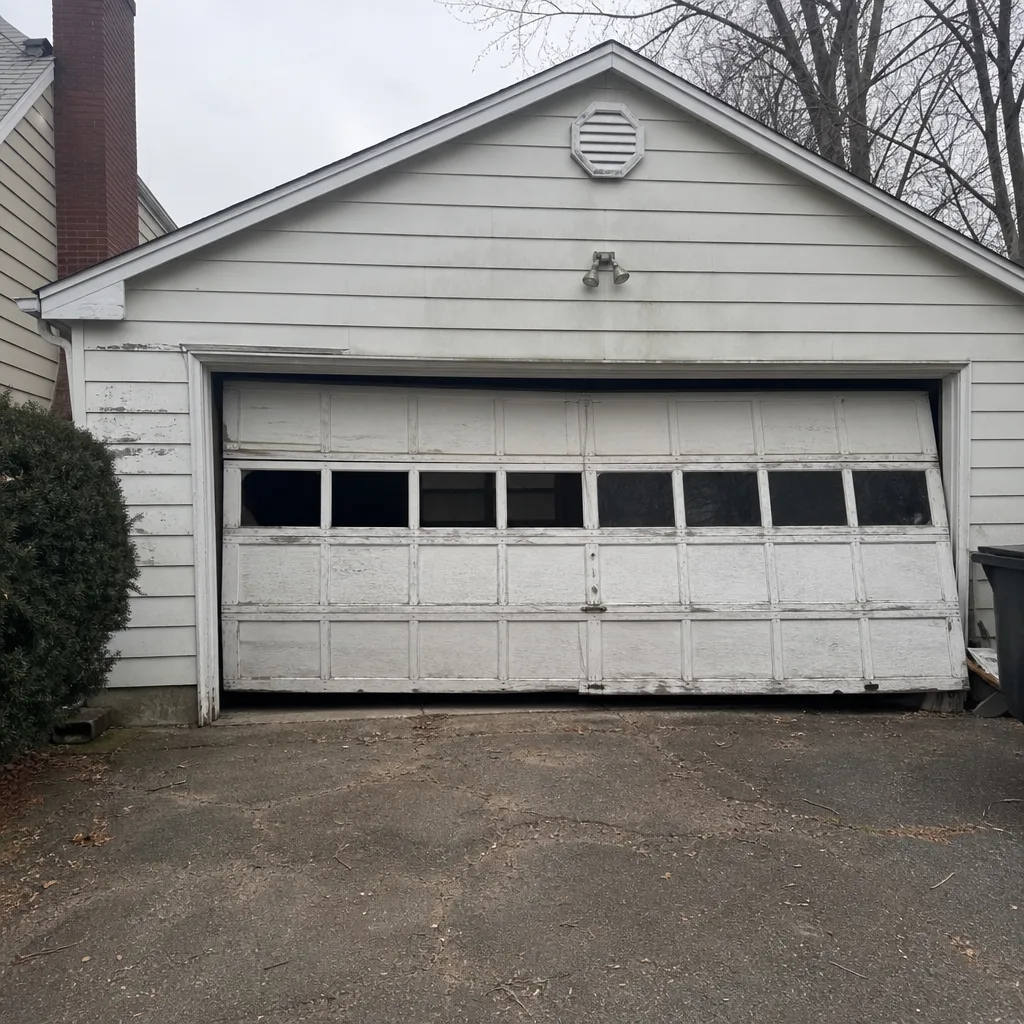 Before
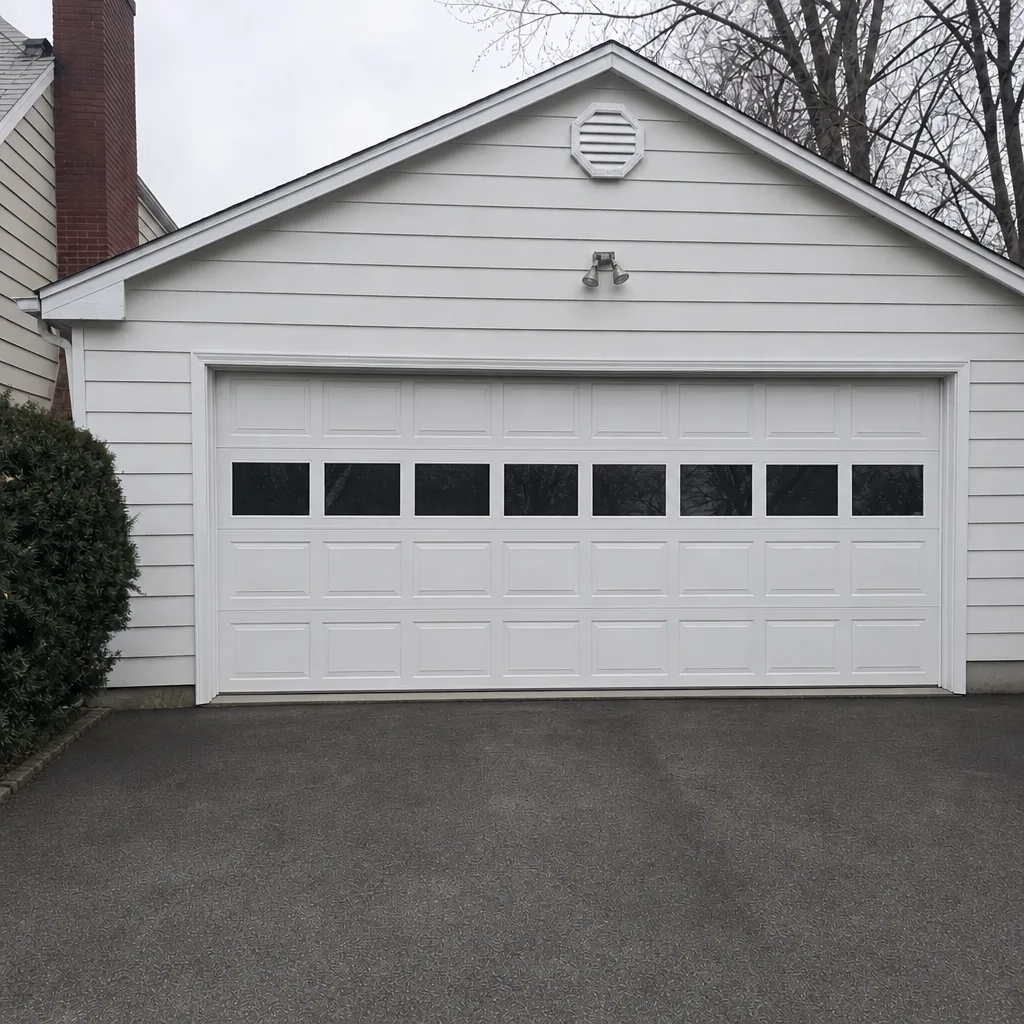 After
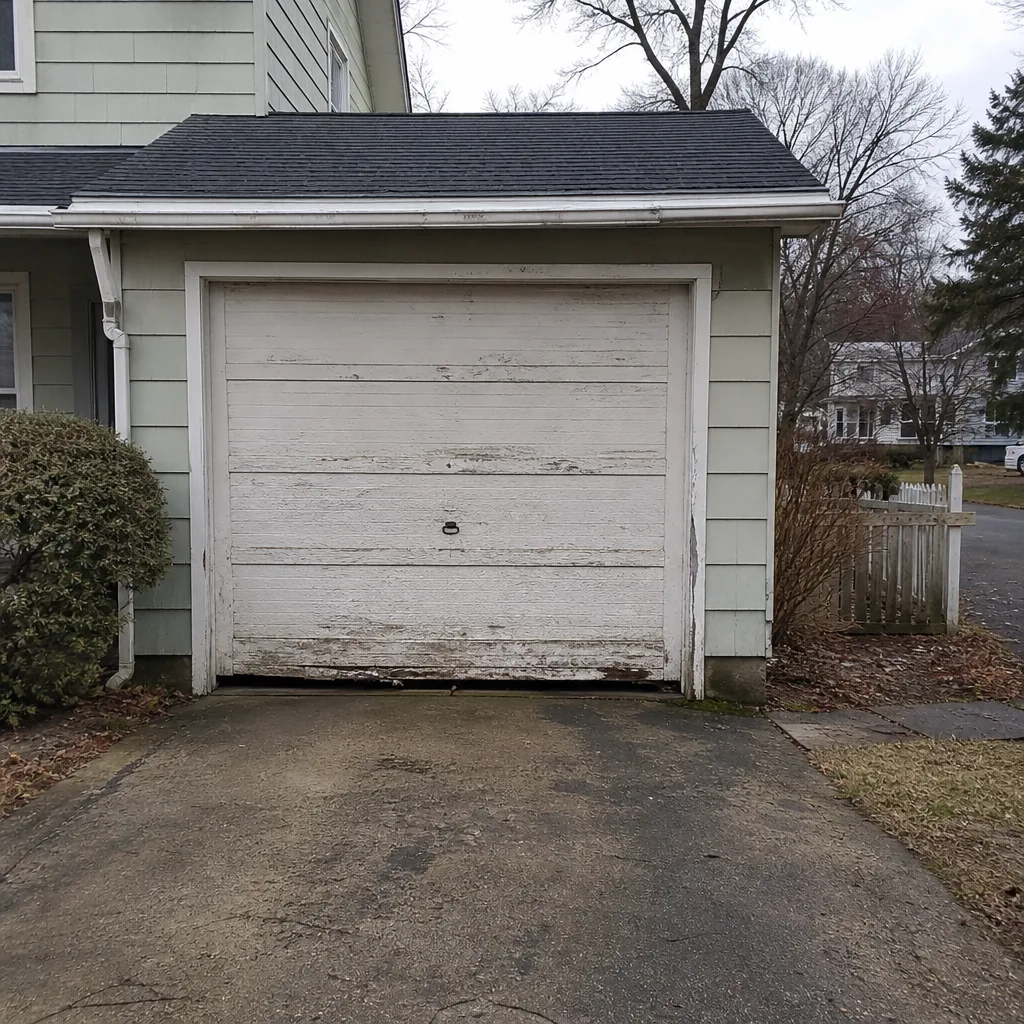 Before
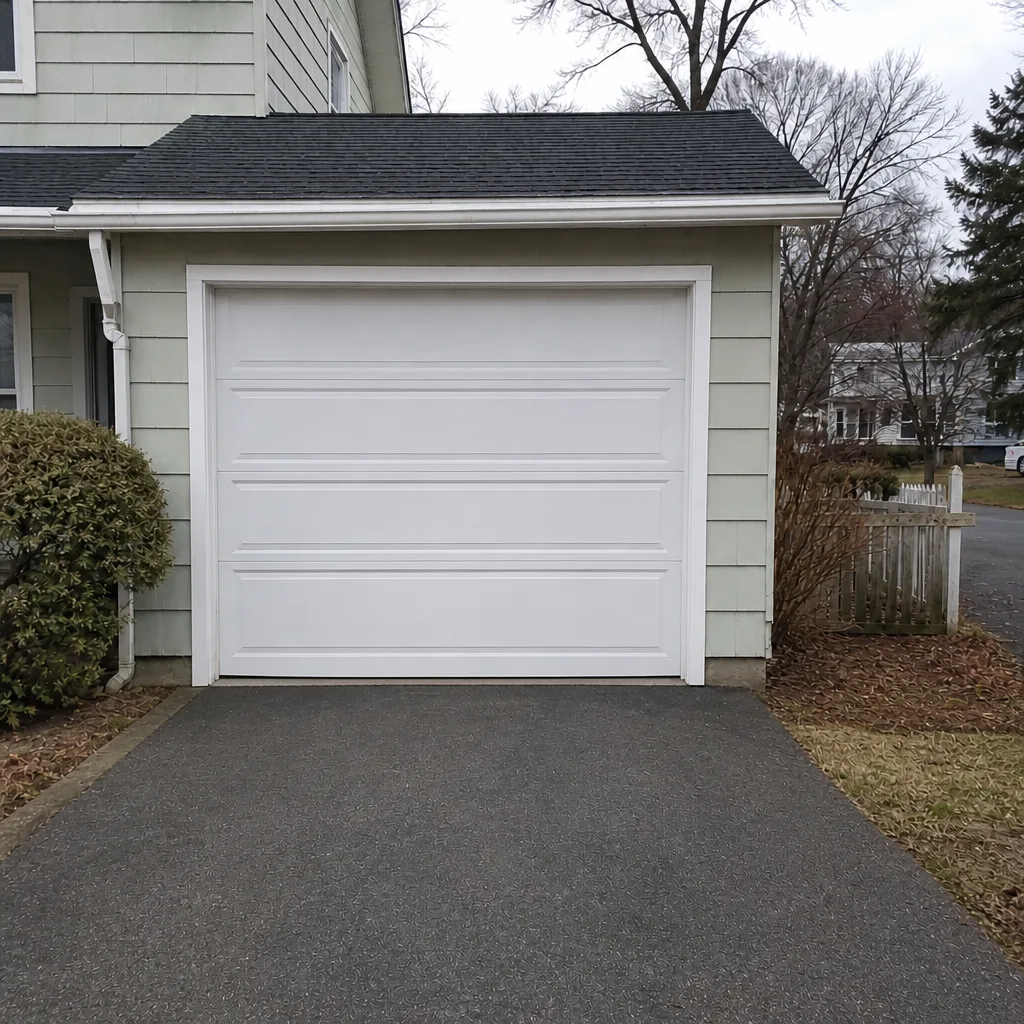 After
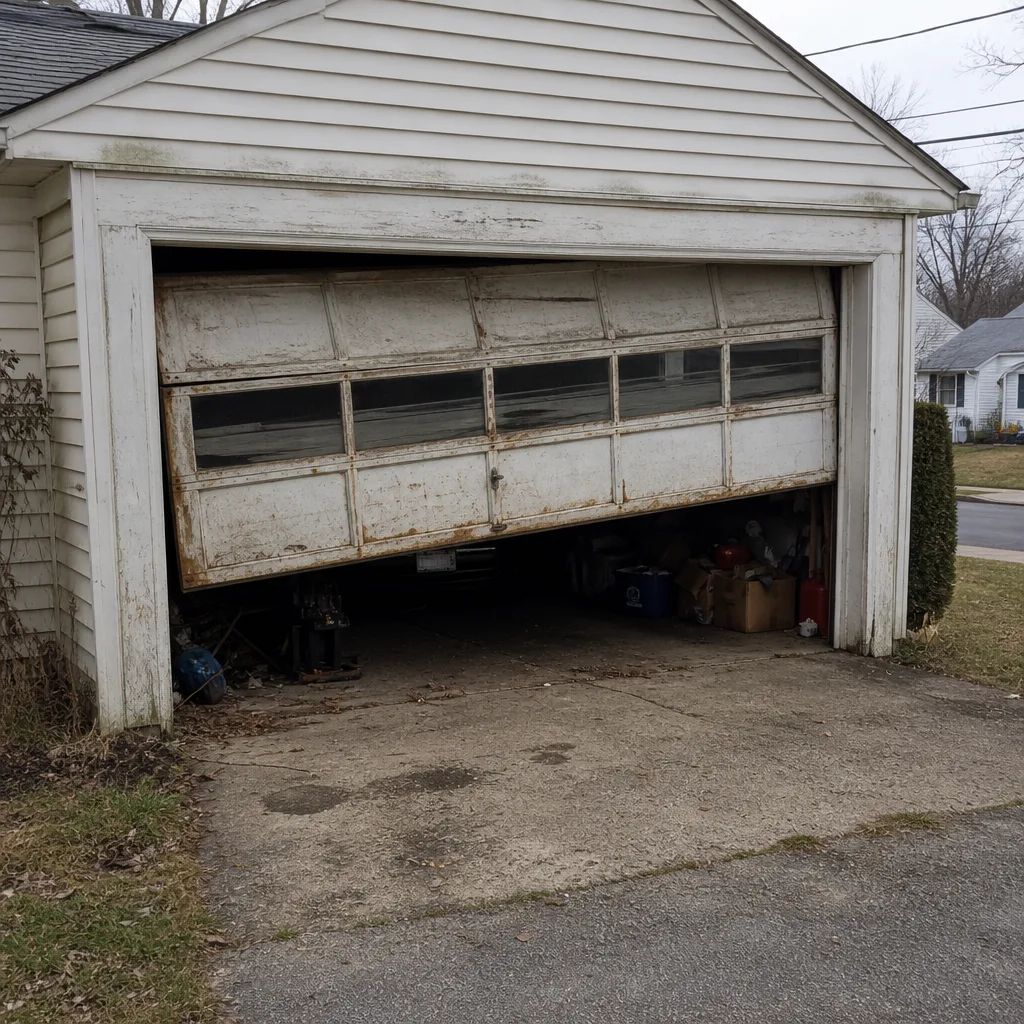 Before
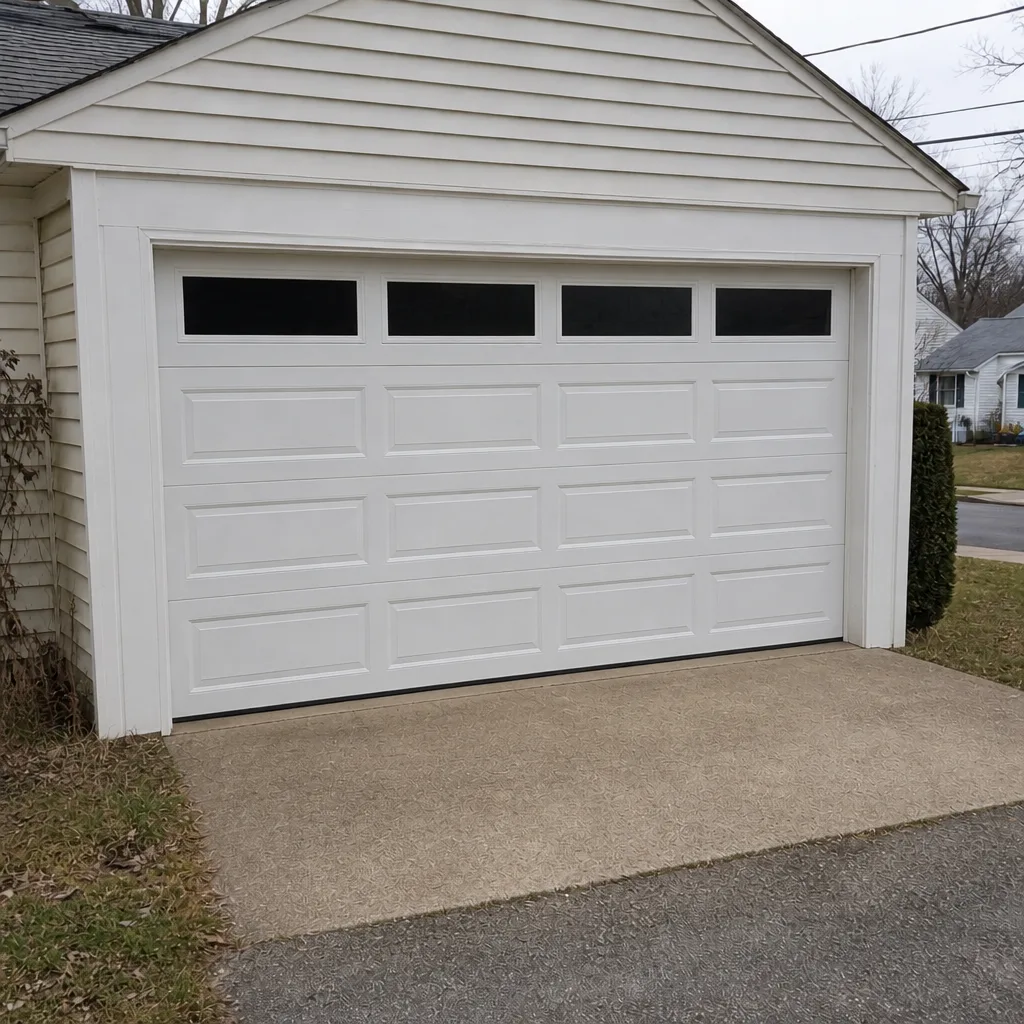 After
When to Call a Professional
Some garage door problems let you wait for a scheduled appointment. Others don’t. Call a professional immediately if the door is stuck halfway open or closed, if you hear a loud snap from the spring area, if the door is visibly crooked on the track, if the opener runs but the door doesn’t move, or if the safety reverse fails when you test it. A door that’s off its track or being held by a broken spring under residual tension can drop without warning. That’s not a job to experiment with yourself.
For non-urgent work, a scheduled repair or a new door measurement is easier to plan around and usually less expensive. Either way, the price should be quoted and agreed before any work starts, and the written estimate is what you pay. Our technicians have up to 13 years of experience and we can usually tell you on the phone whether a job is urgent or can wait for a scheduled visit. Norwalk Garage Door Repair Pros offers free estimates in Norwalk. Call (855) 337-1321.
Frequently Asked Questions
Typical garage door repair in Norwalk in 2026 runs about $150 to $450, with most jobs landing near the middle of that range. Spring replacement is the most common job and typically lands at $180 to $340 for a single spring, or about double for a matched pair. Exact pricing depends on the part, the door, and the labor. Call (855) 337-1321 for an exact quote, and estimates are free.
We offer emergency service for stuck doors and failed openers, and same-day visits are often available. Not every schedule slot is open, so call and we’ll tell you what’s realistic for the day. Call (855) 337-1321 to see when we can get you back up and running today.
Not without your agreement. We quote in writing and confirm the price before any work starts. If we find something on-site that wasn’t visible during the estimate (a bent track, a broken cable, a worn bearing plate), we stop and quote the additional line item before doing the work. The written quote is the price you pay. Call (855) 337-1321 for a free estimate.
The local professionals we connect you with are licensed and insured as the state of Connecticut requires. We only work with vetted local technicians who are experienced on the major garage door brands. Call (855) 337-1321 with any questions about credentials before you book.
A new single steel door installed in Norwalk typically starts around $1,200 for an uninsulated door and runs to about $2,700 for an insulated steel door. Double doors run roughly $2,400 to $3,800, and wood or composite doors go higher. The written quote after a free measure sets the final price. Call (855) 337-1321 to schedule your measure.
Because the springs aren’t the same spring. A cheaper quote often uses a lighter wire gauge or a lower cycle rating, which costs less but fails sooner. A spring rated for 20,000 cycles typically costs more but lasts roughly twice as long as a 10,000-cycle spring. Ask for the cycle rating and wire gauge on any quote, then call (855) 337-1321 to compare ours.
The Bottom Line
Garage door pricing in Norwalk isn’t opaque because contractors are hiding something; it’s opaque because the industry has no standard way to describe the same job. Once you know the four components of any quote (parts, labor, service charge, disposal), what a matched pair costs versus a single spring, what cycle rating means, and what the on-site adjusters typically are, you can compare three quotes fairly and know which one is actually the better deal. The written estimate is the price, not a starting point. If you’d rather skip the estimation guesswork, we’ll come out, measure the job, and quote it clearly, with no work starting until you’ve agreed to the number.
Norwalk Garage Door Repair Pros is a dedicated garage door specialist, not a general contractor. We work on LiftMaster, Chamberlain, Genie, Clopay, Amarr, Wayne Dalton, Craftsman, and Raynor equipment, so we can diagnose the exact hardware on your door instead of running generic tests. Our technicians have up to 13 years of experience, and we cover repair, opener repair, spring repair, and new installation from a single call, plus emergency service when the door is stuck and you need it working today. For a free estimate in Norwalk, call (855) 337-1321 and we’ll get you a written price before any work begins.
Written by the team at Norwalk Garage Door Repair Pros.